Best Cafes in Vienna: 15 Historic Coffee Houses You Must Visit
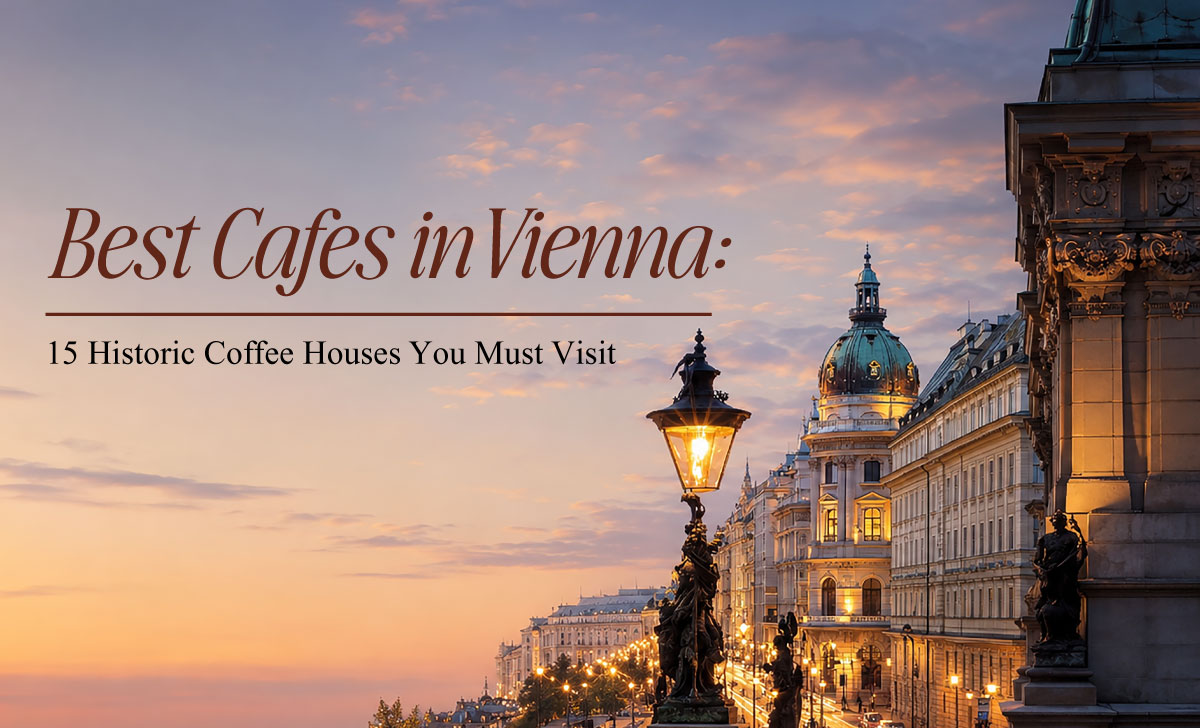
Vienna didn’t just invent a coffee culture, it turned the act of drinking coffee into a civic ritual worth protecting by law.
In 2011, UNESCO added Viennese Coffee House Culture to Austria’s list of Intangible Cultural Heritage, recognising something no other capital has quite managed, a 300-year-old tradition where one cup of Melange buys a marble table, a rack of international newspapers, and as many hours as you care to stay.
Legend traces it to 1683, when sacks of coffee beans left behind after the failed Ottoman siege gave Vienna its first taste of the bean. Around 1900, Vienna had approx 600 coffee houses, & the most fascinating part is, most of those are still pouring today.
The most historic coffee houses, the marble and velvet rooms that have been the home of Freud, Trotsky, and many generations of Viennese writers are among the best cafes in Vienna.
Find out about the famous coffees here, the rules of polite behaviour which are so crucial, locals keep coming back and one easy day-plan for Vienna city tour whilst you’re café hopping.
15 Best Cafés in Vienna You Must Experience
Local residents still bask for hours in the best cafes that Vienna has to offer. Here’s the list of the city’s most historic cafes and a few local picks that make your Vienna experience easy when you are looking for the best things to do in Vienna.
#1: Café Central (est. 1876)
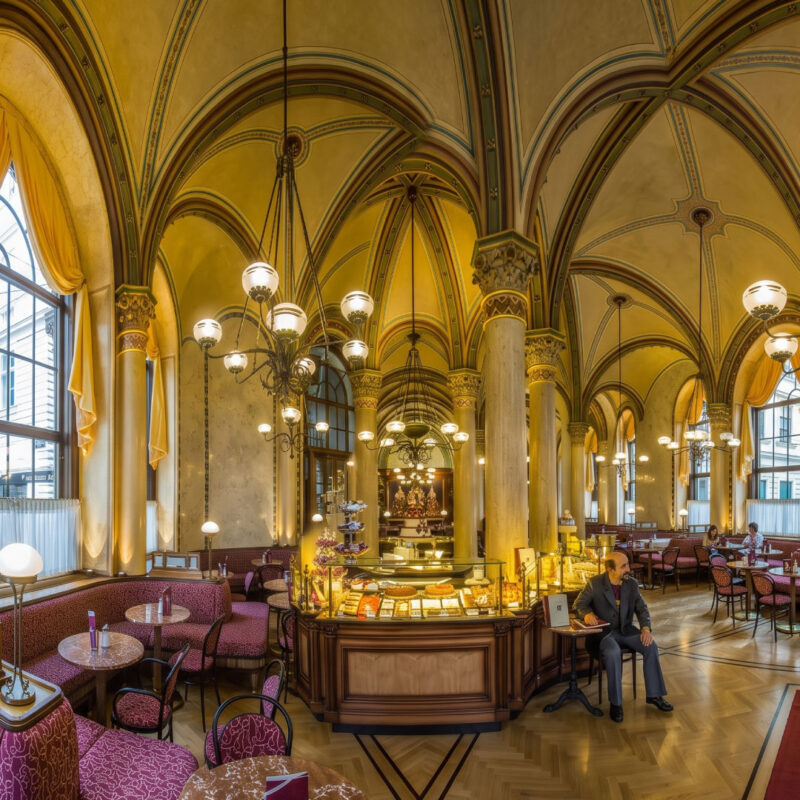
After 150 years, Cafe Central is undergoing renovation at the moment, its temporary out of service (closed since 16 March 2026, opening expected autumn 2026). Also, the same team is running a pop-up DECENTRAL at the Palais Harrach, Freyung.
The Central is located in the Venetian-Gothic Palais Ferstel, home of Freud, Trotsky and Peter Altenberg, where they all played chess and sipped coffee under the marble columns and blind and gilt chandeliers, and a life-sized statue of Altenberg still welcomes visitors at the door.
- Location: Herrengasse 14, 1st district
- Signature Coffee: Wiener Melange
- Must-try Dessert: Café Central Torte (chocolate, marzipan, orange)
- Interior: Vaulted Gothic-revival ceilings, marble columns
- Average Price: €5-6 coffee, €7-8 cake
- Best Time: Right at opening, once reopened, to beat the queue
- Nearby: Hofburg, Graben, Kohlmarkt
- Insider Tip: Check DECENTRAL at Freyung 3 in the meantime, same coffee, same team
#2: Café Sacher (est. 1876)
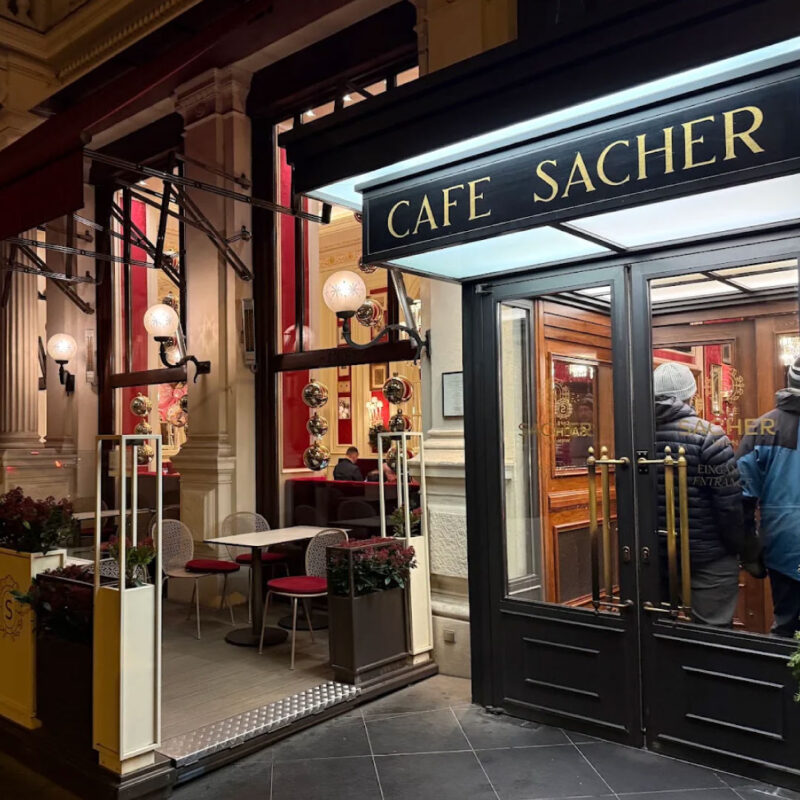
Besides the State Opera (in Hotel Sacher), it is the house of birth and, later, the battleground of the Original “Sachertorte” (dense chocolate cake) which was invented by Franz Sacher in 1832. It’s almost an exhibition area and it is a café, with a never ending line of people at the door.
- Location: Philharmonikerstrasse 4, 1st district
- Signature Coffee: Kleiner Brauner
- Must-try Dessert: Original Sachertorte with unsweetened Schlagobers
- Interior: Red-toned salons, oil paintings, hotel-grade formality
- Average Price: €7–9
- Best Time: Mid-morning on a weekday
- Nearby: State Opera, Albertina
- Insider Tip: Reserve ahead, or buy a slice to go from the ground-floor shop to skip the line
#3: Café Demel (est. 1786)
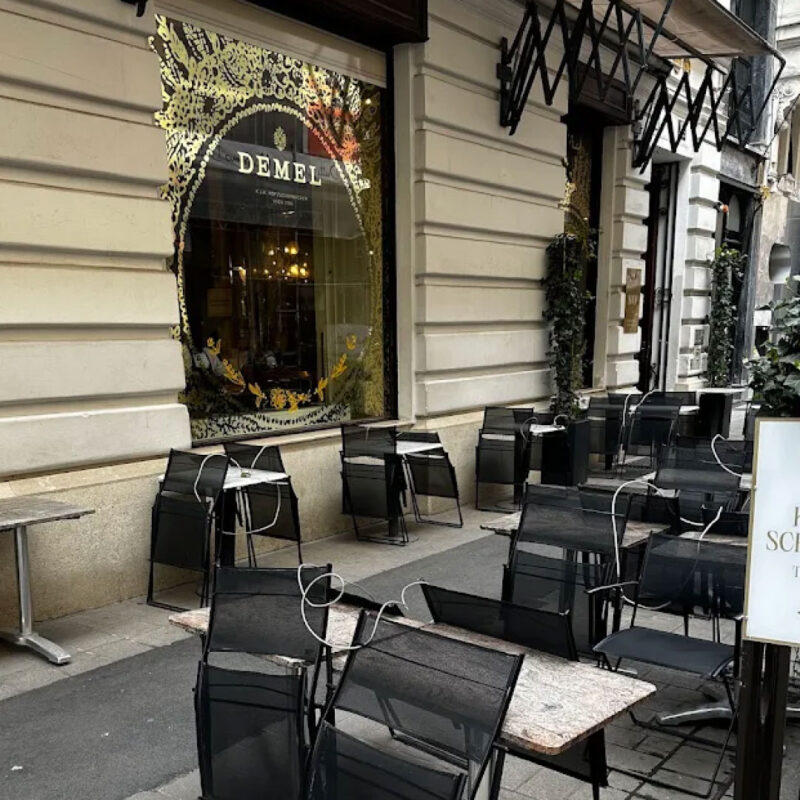
Since 1786, Vienna’s imperial confectioner, Demel presented the Habsburg court and had a standing order for candied violets which was honored by Empress Elisabeth (“Sisi”) and the rest they received went in the 1880s into their Rococo salon on Kohlmarkt. It lost a lawsuit of the Sachertorte which it has been fighting for decades but at the same time offers its own creation, Eduard-Sacher-Torte.
- Location: Kohlmarkt 14, 1st district
- Signature Coffee: Großer Brauner
- Must-try Dessert: Kaiserschmarrn or the Anna Torte
- Interior: Rococo stucco, chandeliers, glass-fronted pastry kitchen
- Average price: €6-9
- Best Time: Early afternoon, after the lunch rush
- Nearby: Hofburg, Michaelerplatz
- Insider Tip: The terrace looks straight onto the Hofburg, worth the wait for a window seat
#4: Café Landtmann (est. in 1873)
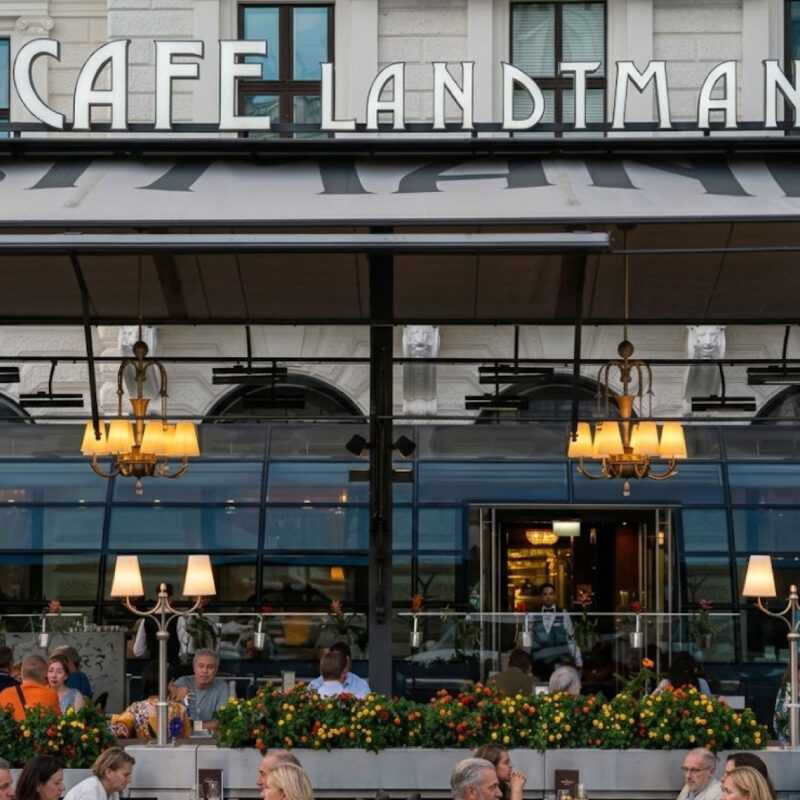
Initially located across the street from the Burgtheater, some of Freud’s very own Kleiner Brauner and foreign newspapers frequented Landtmann, which later became the regular meeting place for Marlene Dietrich and Paul McCartney. In 1929, the dining room was restored which was an art deco and is one of the finest and most elegant interiors of the Ringstraße today.
- Location: Universitätsring 4, 1st district
- Signature Coffee: Wiener Melange
- Must-try Dessert: Landtmann’s Original chocolate mousse cake
- Interior: Art Deco wood panelling, brass fittings
- Average price: €6-8
- Best Time: Before or after a Burgtheater performance
- Nearby: Rathaus, Volksgarten, University of Vienna
- Insider Tip: Sit on the terrace facing the Burgtheater at golden hour
#5: Café Hawelka (est. in 1939)
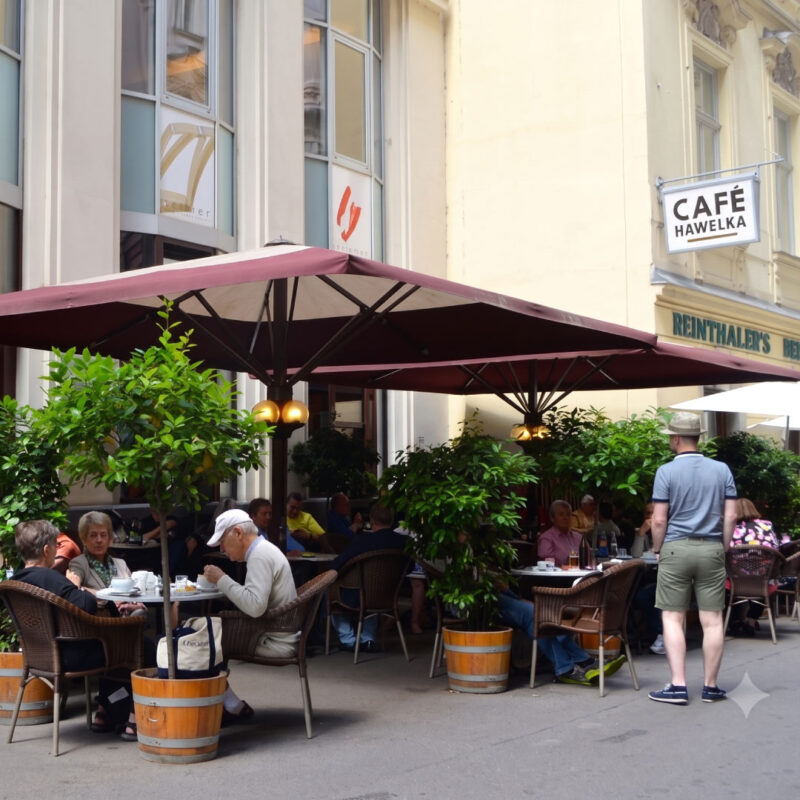
Leopold and Josefine Hawelka opened this old, dim room in 1939 and it was used by Vienna’s postwar artists, among them Friedensreich Hundertwasser, as a haven after midnight. The interior has remained the same for decades and the café still remains a family business.
- Location: Dorotheergasse 6, 1st district
- Signature Coffee: Einspänner
- Must-try Dessert: Warm Buchteln with vanilla sauce (served after 10pm)
- Interior: Worn velvet booths, dim lighting, original 1939 fittings
- Average Price: €5-7
- Best Time: Late evening, for the full bohemian atmosphere
- Nearby: Graben, Stephansplatz
- Insider Tip: Buchteln only come out after 10pm, ask earlier and you’ll be sent away
#6: Café Frauenhuber (est. in 1824)
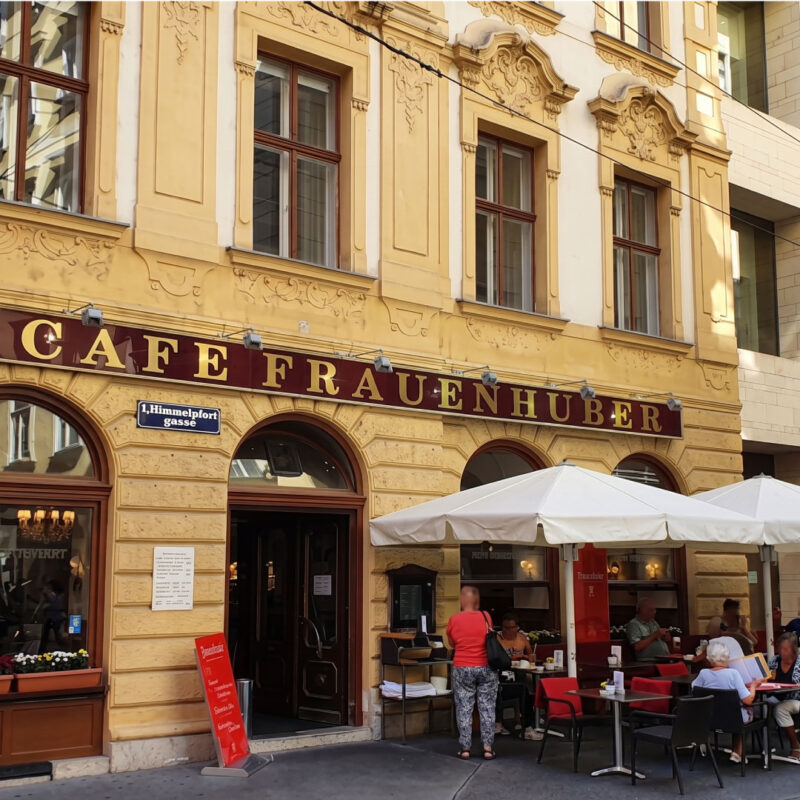
Founded in 1824, Vienna’s oldest continually operated coffee house, has been serving coffee since then, and Mozart and Beethoven played table music, both to the paying clientele of the seats and to the dining guests, here in the 1780s and 90s. The dull, unpainted rooms are more like those of old Vienna than anywhere else.
- Location: Himmelpfortgasse 6, 1st district
- Signature Coffee: Wiener Melange
- Must-try Dessert: Apfelstrudel
- Interior: Intimate, low-key, traditional
- Average Price: €5-7
- Best Time: Quiet mornings or early evenings
- Nearby: Kärntner Straße, Stephansdom
- Insider Tip: Ask staff to point out the plaque marking Mozart and Beethoven’s performances
#7: Café Schwarzenberg (est. in 1861)
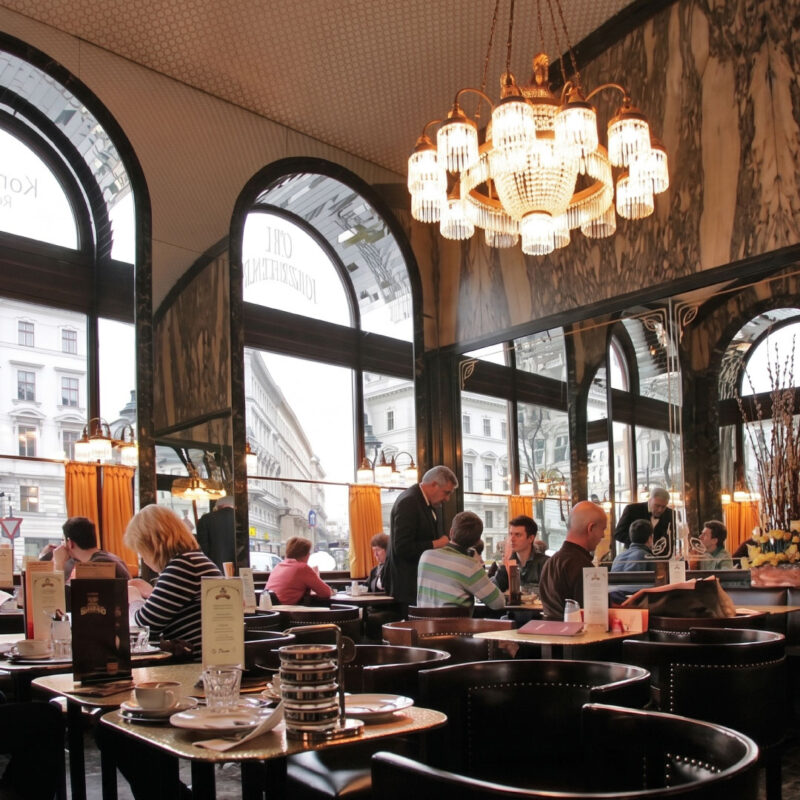
The oldest surviving café on the boulevard, the rococo-style marble corner salon and gold flecked mosaic ceiling are little changed from when the Boulevard was being constructed in 1861, including a bullet scarred mirror from the occupation days of 1945.
- Location: Kärntner Ring 17, 1st district
- Signature Coffee: Verlängerter
- Must-try Dessert: Sachertorte with Alt Wiener hot chocolate
- Interior: Marble corner salon, mosaic ceiling
- Average Price: €6-8
- Best Time: Afternoon, for the light through the Ring-facing windows
- Nearby: Schwarzenbergplatz, Musikverein
- Insider Tip: Ask for the corner room, it was the original 19th-century ladies’ salon
#8: Café Sperl (est. in 1880)
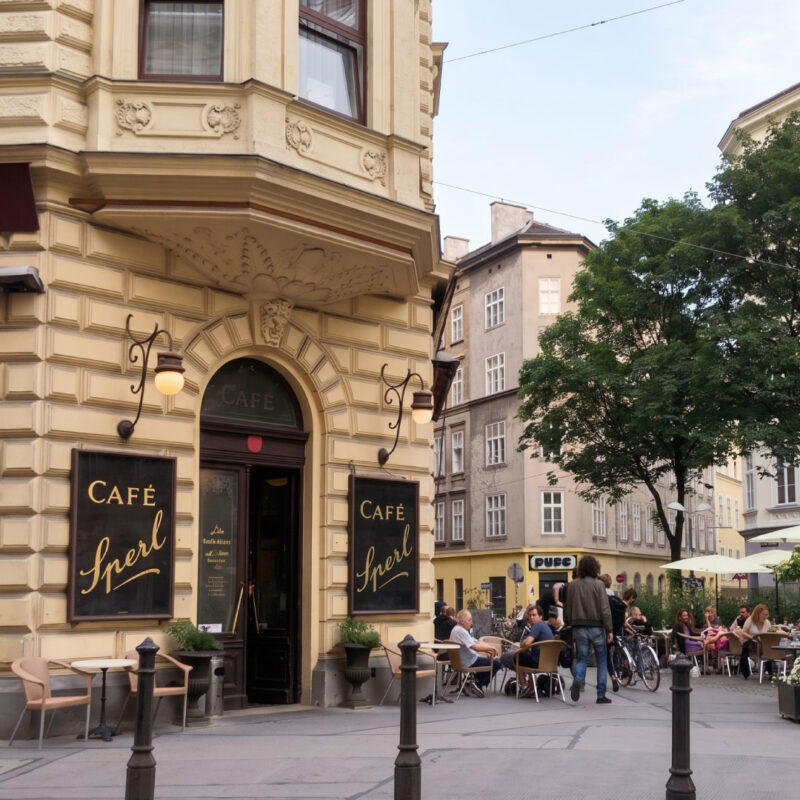
The Sperl rooms were originally built for Vienna in the different parts of Ringstraße-era in 1880 and are still in use. Three carambole billiard tables, parquet floors and Thonet chairs, which were once favorite hangouts of Secession artists, were also once part of the international coffee house card and were still being used as such in the times of Leopold II and Archduke Rudolph.
- Location: Gumpendorfer Straße 11, 6th district
- Signature Coffee: Kleiner Brauner
- Must-try Dessert: Sperltorte (chocolate-almond)
- Interior: Original 1880 Thonet furniture, billiard room, crystal chandeliers
- Average Price: €5-7
- Best Time: Sunday afternoon, for live piano from 3:30pm
- Nearby: Naschmarkt, Theater an der Wien
- Insider Tip: There’s a small children’s corner if you’re travelling with family
#9: Café Museum (est. in 1899)
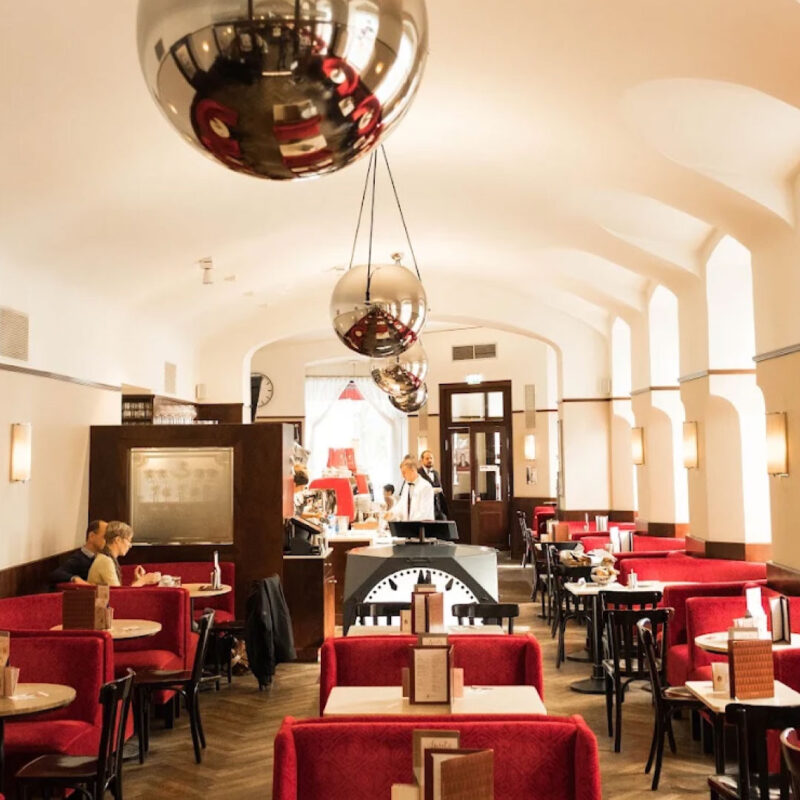
Invented by modernist architect Adolf Loos in 1899, Cafe Museum shocked Vienna with its sleek bentwood furniture instead of the Sentimental’s conventional furniture, the ordinary people called it “Café Nihilism. Here Secession artists of Klimt’s and Schiele’s generations took their drinks.
- Location: Operngasse 7, 1st district
- Signature Coffee: Espresso or Cappuccino
- Must-try Dessert: Pumpkin soup or Apfelstrudel
- Interior: Restrained red-and-chrome, high vaulted ceiling
- Average Price: €5-7
- Best Time: After visiting the nearby Secession Building
- Nearby: Secession, Naschmarkt, Karlsplatz
- Insider Tip: Look up, the ceiling globes echo the original Loos-era design
#10: Café Prückel (est. in 1903)
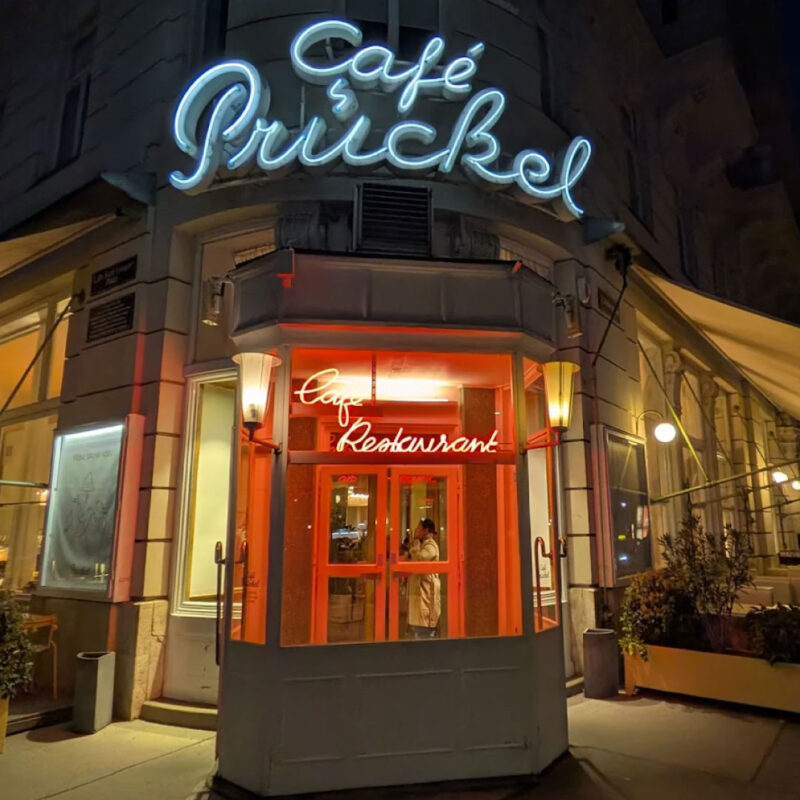
Prückel came into operation in 1903, but is in a 1950s design, with a rare mid-20th-century facelift by architect Oswald Haerdtl over the entire width of the facade over the Ringstraße, with pastel booths remaining intact. It’s a popular place at the university next door for students learning design.
- Location: Stubenring 24, 1st district
- Signature Coffee: Einspänner
- Must-try Dessert: House-baked Apfelstrudel
- Interior: 1950s pastel booths, Art Nouveau details
- Average Price: €5-7
- Best Time: Evening, for live piano (Mon/Wed/Fri from 7pm)
- Nearby: MAK Museum, Stadtpark
- Insider Tip: Cash only, carry euros
#11: Café Bräunerhof (est. in 1920s)
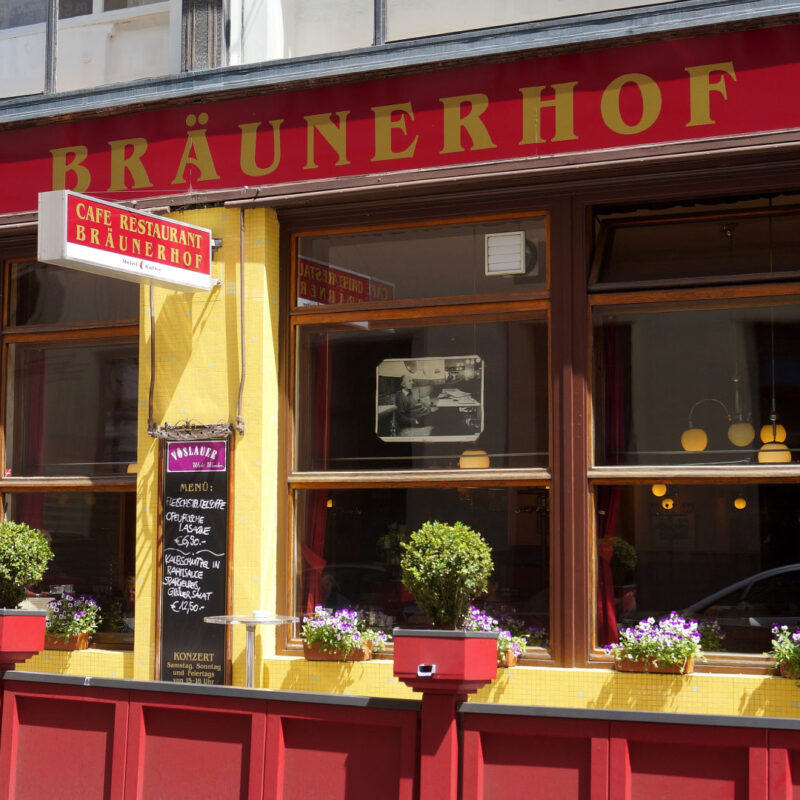
This cafe was the second office of writer Thomas Bernhard, and they say the “old fashioned gnä’ Frau, gnä’ Herr” to regulars to this day. No whizzing Internet, no power outlets, just waltzes, globe lamps, and stone tabletops featured by an eclectic group of musicians on Saturdays.
- Location: Stallburggasse 2, 1st district
- Signature Coffee: Wiener Melange
- Must-try Dessert: Marillenfleck (apricot cake)
- Interior: Globe lamps, wooden chairs, living-room feel
- Average Price: €5-6
- Best Time: Saturday afternoon, for the live waltz trio
- Nearby: Hofburg, Graben
- Insider Tip: Closes early (around 7-8:30pm), plan an afternoon visit
#12: Café Korb (est. in 1904)
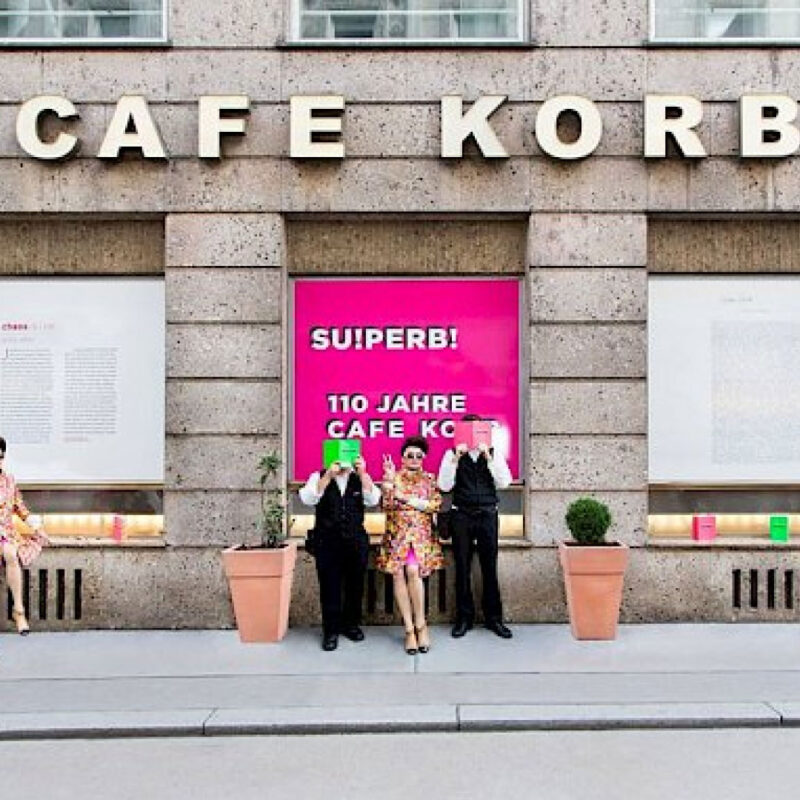
The café was the setting for weekly meetings of the Vienna Psychoanalytic Society after 1904, and, thanks to its long-time owner and former actress Susanne Widl – the interior, which leans more towards the 1960s, continues to attract Austria’s literary community, including Elfriede Jelinek who won the Nobel Prize in 2002.
- Location: Brandstätte 9, 1st district
- Signature Coffee: Kleiner Brauner
- Must-try Dessert: Topfenstrudel
- Interior: Retro 1960s furnishings, basement art lounge
- Average Price: €5-7
- Best Time: Late afternoon, for a quieter room
- Nearby: Graben, Peterskirche, Stephansdom
- Insider Tip: Check the basement Art Lounge for readings and rotating exhibitions
#13: Café Diglas (Wollzeile) (est. 1923) (Diglas family, since 1875)
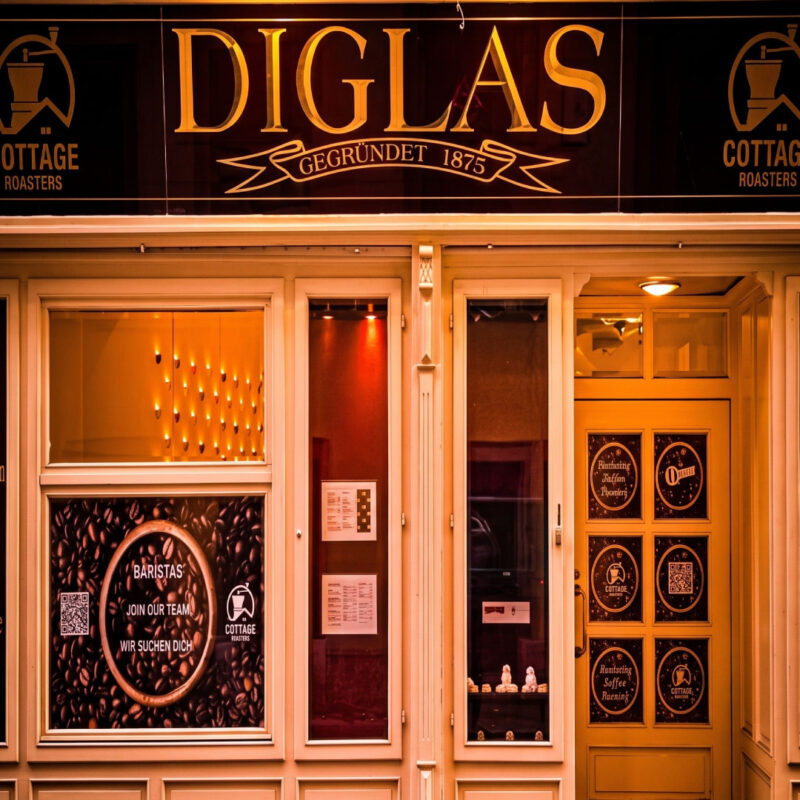
This Viennese coffee house has been in the hands of the Diglas family since 1875. Opened in 1923, the Viennese coffee house underneath St. Stephen’s Cathedral is able to offer the vaulted ceiling, whimsical lamp shades and its own do-it-all bakery. It seems that composer Franz Lehár was a regular visitor.
- Location: Wollzeile 10, 1st district
- Signature Coffee: Wiener Melange
- Must-try Dessert: Banana Schnitte from the house patisserie
- Interior: Vaulted rooms, in-house bakery
- Average Price: €5-7
- Best Time: Breakfast, for the full Wiener Frühstück
- Nearby: Stephansdom, Kärntner Straße
- Insider Tip: Order the soft-boiled egg breakfast for a proper local start
#14: Café Imperial (est. in 1873)
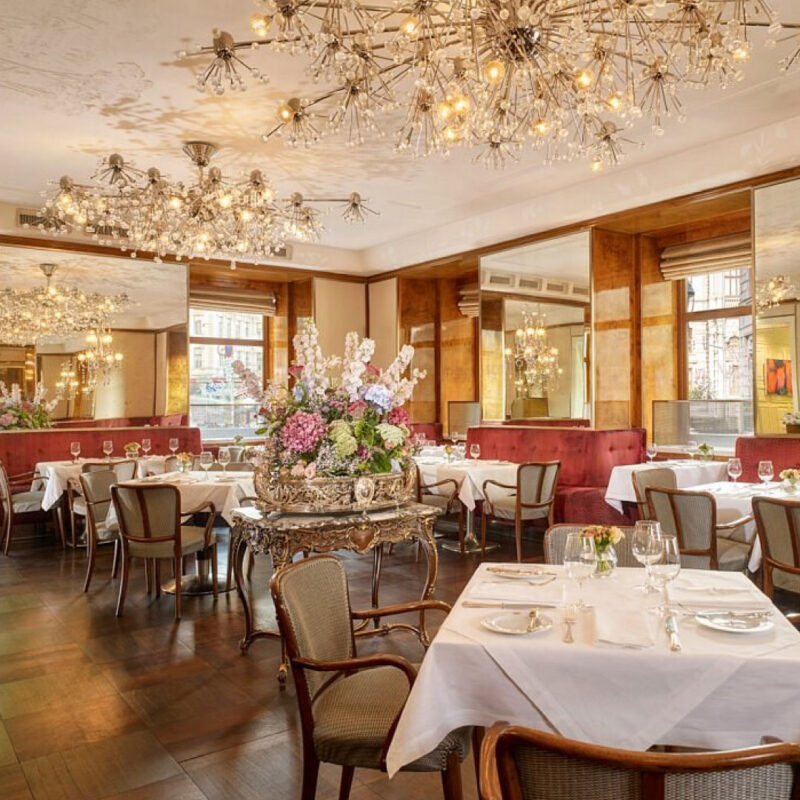
It was opened together with the Hotel Imperial in 1873 and this is the birthplace of the Imperial Torte: a chocolate and marzipan cake that its creator always kept his secret for life! The largest of Vienna’s hotel cafes, a favourite with an audience of State visitors and visiting musicians.
- Location: Kärntner Ring 16, 1st district
- Signature Coffee: Maria Theresia
- Must-try Dessert: Imperial Torte
- Interior: Gilded hotel-lobby grandeur
- Average Price: €8–10
- Best time: Mid-afternoon, for a quieter room
- Nearby: Musikverein, Karlsplatz
- Insider Tip: Slices come individually wrapped and stamped, a proper edible souvenir
#15: Café im Kunsthistorischen Museum (est. in 1899)
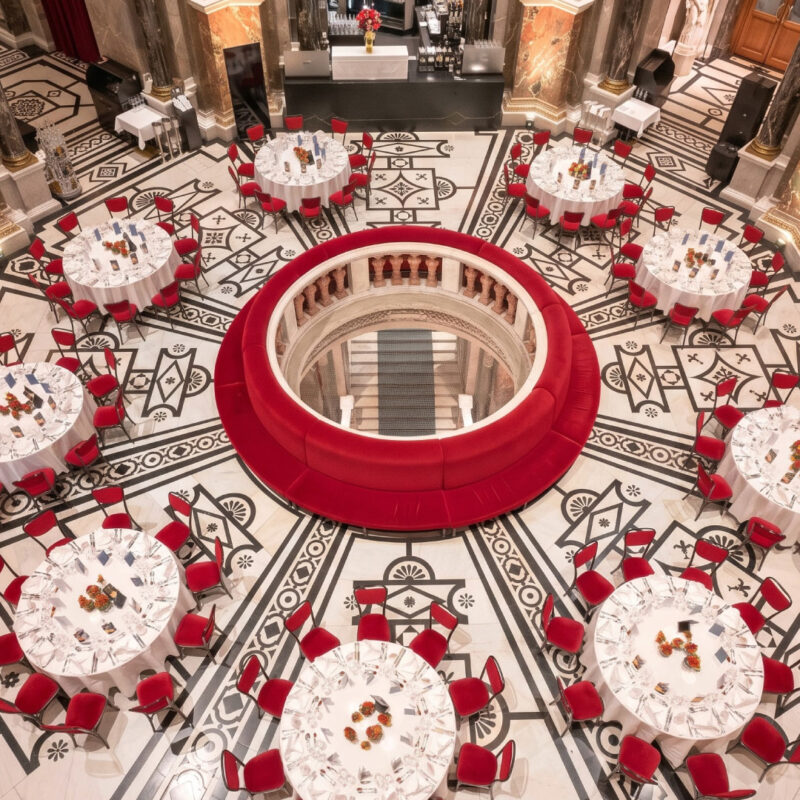
Domed hall in the historical building of Kunsthistorisches Museum (Viennese Art Historical Museum) with frescoed ceilings, marble columns and a black and white geometric floor makes it the most photographed café in Vienna. Operated by the same family of the Café Schwarzenberg.
- Location: `Maria-Theresien-Platz, 1st district (inside the museum, Dome Hall)
- Signature Coffee: Wiener Melange
- Must-try Dessert: Sachertorte
- Interior: Frescoed dome, marble columns, red velvet seating
- Average Price: €6-8 (museum admission required)
- Best Time: After touring the collection
- Nearby: MuseumsQuartier, Natural History Museum
- Insider Tip: Worth the museum ticket even on a short trip, day tickets are sold at the door
Must-Try Viennese Coffee Drinks
Ordering a ‘Coffee’ in Vienna is a tourist’s importment, the coffee menus have 20 to 40 named coffee variations that are all based on the Mokka (espresso) base shot. In addition to the three listed below, most menus include Espresso or Cappuccino (without flavor enhancements), Maria Theresia, Kleiner, Großer Brauner, and Verlängerter.
#1: Wiener Melange
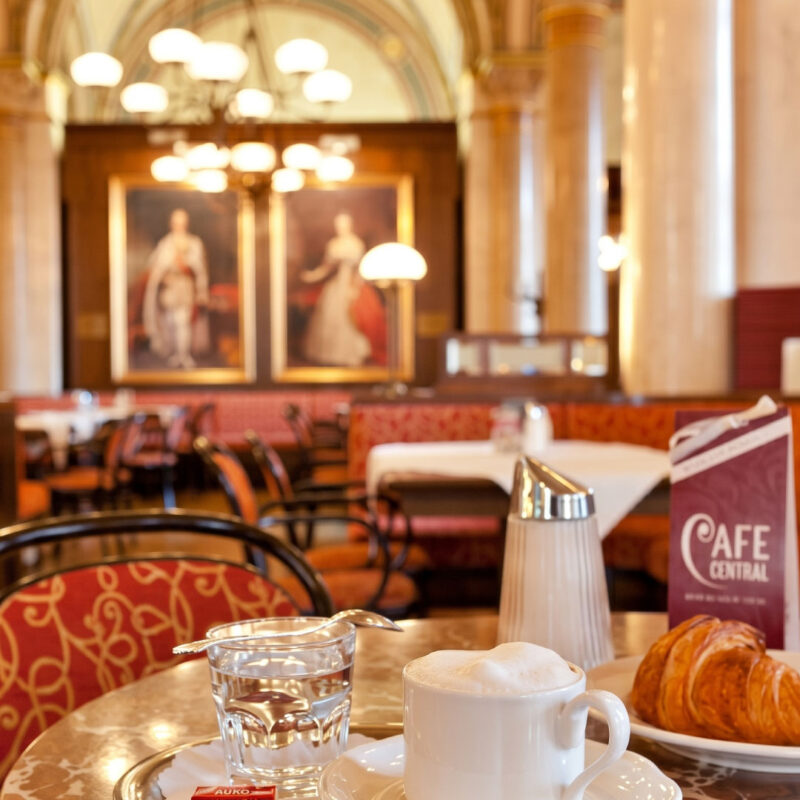
| Description | Espresso topped with steamed milk and a light, airy foam crown |
| Taste | Mild and milky, gentler than an Italian cappuccino |
| Avg price | €4.50–5.50 |
| Best café | Café Frauenhuber or Café Bräunerhof |
| Local recommendation | Order it mid-morning with a plain croissant, not after a heavy meal |
#2: Einspänner
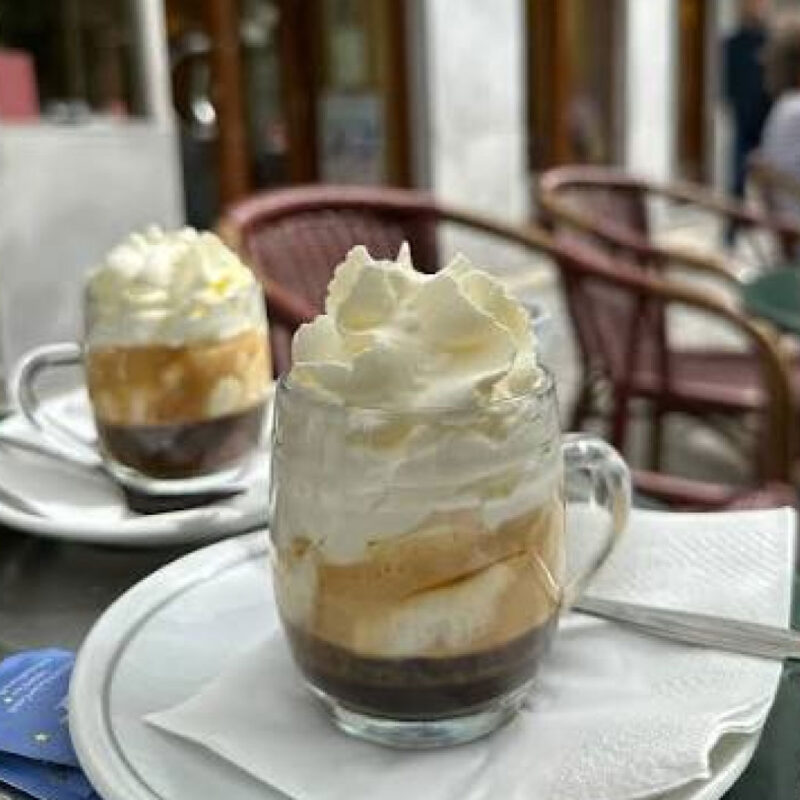
| Description | A double Mokka in a tall glass, capped with whipped cream, no stirring |
| Taste | Strong and bittersweet, the cream melts in gradually |
| Avg price | €5–6 |
| Best café | Café Hawelka or Café Prückel |
| Local recommendation | Named after the one-horse Fiaker drivers who held the reins in one hand and the handled glass in the other |
#3: Fiaker
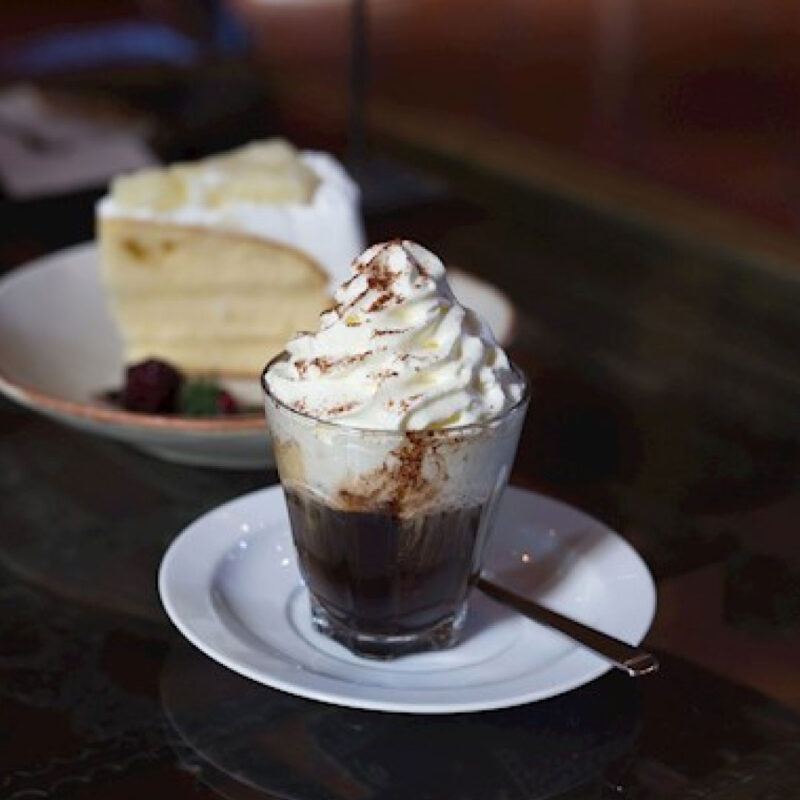
| Description | Black Mokka in a glass with a shot of rum (sometimes Kirschwasser) and whipped cream |
| Taste | Warming and slightly boozy |
| Avg price | €6-7 |
| Best café | Café Sacher or Café Landtmann |
| Local recommendation | Better as an afternoon pick-me-up than with breakfast |
Experience Vienna Beyond the Cup
Walking down five or six of the historic Kaffeehäuser in one day is quite a walk, so it helps to know a few of the Kaffeehäuser that are found a few streets away from the postcard tour route. This is where a live guided tour really lives up to its name, so much so that it takes its rightful spot in the day without claiming it (if at all).
At Libra Tours Vienna, we run multiple small & private Vienna sightseeing tours in vintage-styled ride on electric vehicles. Our tour departs from the Burgtheater, & we are always happy to help you with our English or German-speaking private tour guide in Vienna who can point out a hidden café between stops rather than just narrating monuments.
Our vehicles are weatherproofed against Vienna’s changeable weather and require no walking, so a Basic or Classic route works well for a first morning of orientation before you set off on foot toward the coffee houses further from the centre.
Our Vienna Night Tour is a night out at the Ringstraße, which ends at an illuminated landmark; it is a very useful flat for your last Einspänner of the day at an evening café.
Frequently Asked Questions (FAQs)
Q: What are the best cafes in Vienna?
A: Vienna’s most historic coffee houses include:
- Café Central
- Café Sacher
- Café Demel
- Café Landtmann
- Café Hawelka
- All part of the UNESCO-recognised Viennese Coffee House Culture
Café Frauenhuber, serving coffee since 1824, is the oldest continuously operating. Most visitors sample several rather than picking just one.
Q: Is Café Central still open in Vienna?
A: Café Central, which is closed until autumn 2026 for a heritage renovation which involves building systems, and not its historic interior, will reopen on 16 March 2026. Meanwhile, its team has a pop-up shop in Palais Harrach on Freyung, and offers the same coffee and pastries in the vicinity.
Q: What is Wiener Melange?
A: Vienna’s signature coffee, Wiener Melange is served with a shot of espresso, steamed milk and a light, airy foam head, which doesn’t have as strong a head as an espresso served in Italy. It is served in a small cup that usually sits on a small tray, with a bit of water and works great for a time of day!
Q: Do I need reservations at Vienna’s historic cafés?
A: Not usually. Cafés will have a reservation system in place at almost all cafés from 10:00 a.m-7:00 p.m. hot tourist hours, such as Café Sacher, Café Demel, and (reopening soon) Café Central. There are fewer historic cafés, such as Bräunerhof, Korb or Diglas, that need booking; they open up just about when you start looking after 3pm.
Q: How much does coffee cost in Vienna?
A: The simple version of espressos are around €4-5, Melange or Einspänner are going to be priced around €5-6, while the size of cake will cost €6-9 with them side by side. It is at the top end at the grand hotel, cafés such as Sacher and Imperial; but nearer the home, the average coffee house is a euro or two less expensive.
Q: What’s the difference between a Viennese coffee house and a regular café?
A: Around table service, no rush, plenty of time for lingering, a rack of newspapers and a menu of 20-40 different named coffee comes from a Viennese Kaffeehaus. The modern café is more akin to the fast, counter-service style that the travelling public is used to, and has fewer habits than the “café” experience does.