Your Guide to the Best Coffee House in Vienna | Locals Recommended
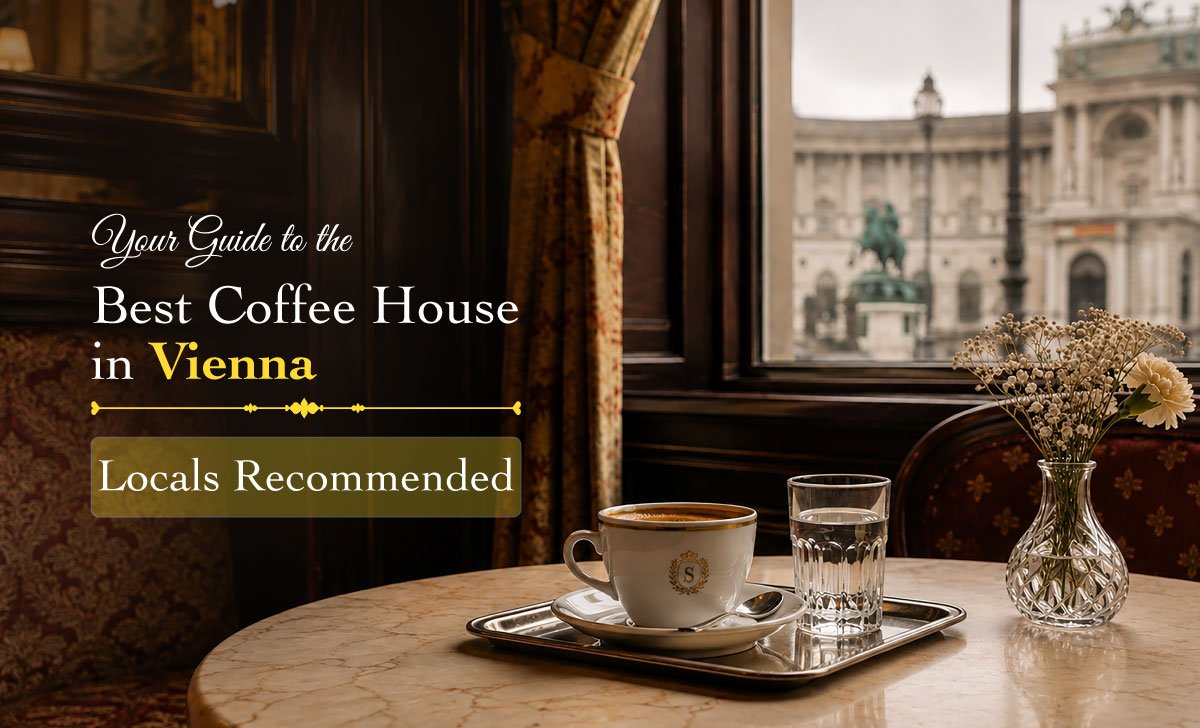
You’re in Vienna for a short trip but still want to explore the most authentic Kaffeehaus. What would you do, where should you actually go?
It’s a harder question than it looks, because the instinctive answer, go to the most famous one, isn’t quite right, and it never entirely was. Vienna doesn’t rank its coffee houses by fame.
Whether the waiter recognizes that you’re still recovering from your first Melange, the deals the cake stand offers, the coffee quality, these are the things that make a Kaffeehaus a Kaffeehaus, and dictate its renown.
It will be worth the wait in line for some of the best-known names in the city. Others are worth trading for a quieter room a few tram stops away. This guide sorts out which is which, including the one major 2026 closure every visitor needs to plan around.
What Makes a Vienna Coffee House Different?
That distinction shapes everything else in this guide. By the 19th century, coffee houses had evolved into Vienna’s informal salons, gathering places for writers, composers, and later psychoanalysts who used the marble tables as small-scale desks.
The coffee house was, in Stefan Zweig’s words, “a democratic club”; everyone could join for the price of a cheap cup, go there for hours to read all the newspapers in the rack, and even get their post there, too.
It has been noted that the practice, the lingering, the reading and the ritual of it is what is recognized for the 2011 inscription, not any one building. That’s useful context before assuming the oldest room automatically wins.
So, Which Is the Best Coffee House in Vienna?
No café is objectively the best; ask five locals, and you’ll get five answers, usually followed by an argument about whether Café X still counts as authentic since the ownership changed.
But as a single recommendation for representing the whole tradition, Café Sperl earns it. Its parquet floors, marble tables, and carambole billiard tables haven’t changed much since 1880; it draws Naschmarkt regulars and students as easily as visitors, and, unlike the city’s most photographed room, you can generally walk in and sit down.
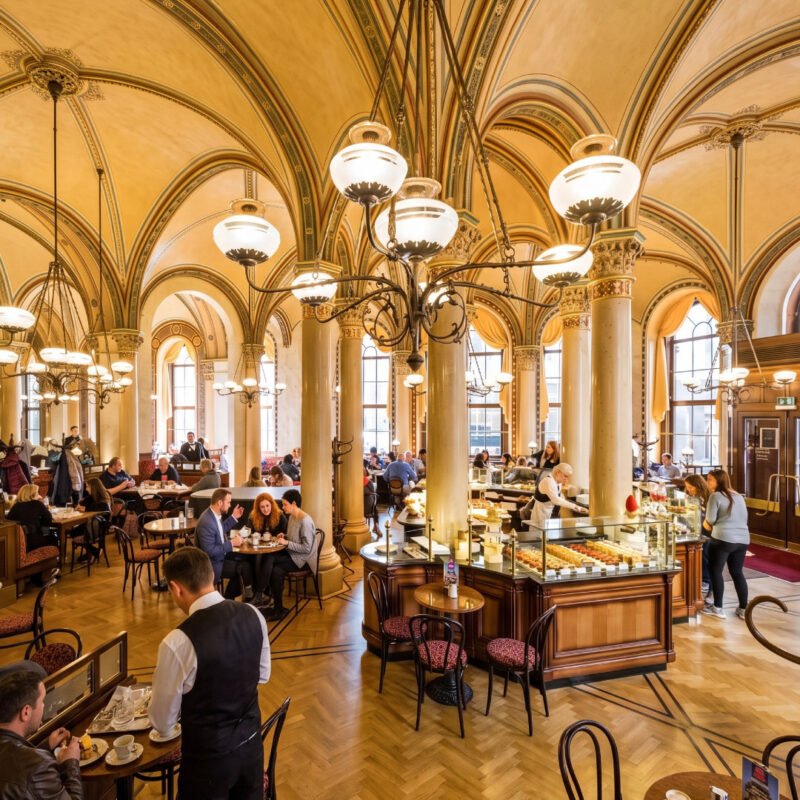
Café Central has the grandest room and the heaviest literary pedigree in Vienna, and in a normal year it would be a serious contender for the top spot; fame and a genuinely good coffee house aren’t opposites, and Central’s queue exists because the room earns it.
But fame and the best use of an hour in Vienna aren’t automatically the same thing, and in 2026 the question is moot regardless; Central is closed (more on that below). A quieter room a local would actually recommend to a friend is often the better trade, and Sperl makes that case as well as anywhere in the city.
The table below lists Vienna’s best coffee houses by what they do best, if you’re not looking for all of the above.
Best Coffee Houses in Vienna at a Glance
9 cafes, which are all measured according to the same standard: what it’s really good at, how clichéd it feels on an average day, and what to drink once you’re there.
| Coffee House | Best For | Location | Tourist Level | Order This |
| Café Sperl | Overall / authentic all-rounder | 6th district, near Naschmarkt | Low-Medium | Melange + Sperltorte |
| Café Central | Grandest room (reopens autumn ’26) | 1st district, Herrengasse | Very High | Melange + Central Torte |
| Café Hawelka | Literary, bohemian authenticity | 1st district, Dorotheergasse | High | Melange + evening Buchteln |
| Café Frauenhuber | First-time visitors | 1st district, off Kärntner Str. | Medium | Melange or Einspänner |
| Café Bräunerhof | A quiet coffee | 1st district, near Hofburg | Low-Medium | Kleiner Brauner |
| Café Prückel | Couples, architecture | Ringstrasse, opposite MAK | Medium | Melange + Apfelstrudel |
| Café Museum | Design and art history | Near State Opera / Naschmarkt | Medium | Melange |
| Demel | Pastries and cake | 1st district, Kohlmarkt | High | Kaiserschmarrn or Sachertorte |
| Café Jelinek | Avoiding tourist crowds | 6th district, off Mariahilfer Str. | Low | Melange + homemade Gugelhupf |
The Best Vienna Coffee Houses (Our Top 3 Picks)
#1: Café Sperl (EST. 1880)
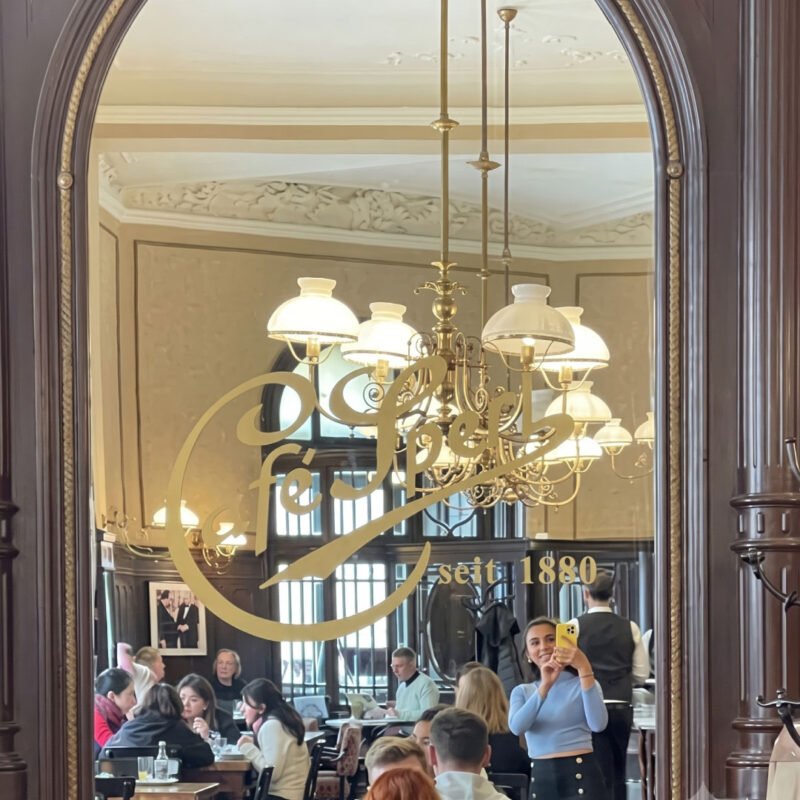
Location: Gumpendorfer Straße 11, 6th district
Café Ronacher was founded near the big Naschmarkt, close to the Theater an der Wien. The parquet floors, carambole billiard tables, and crystal chandeliers are original, and the café briefly but recognizably appears in Before Sunrise.
The readership is weekday mornings, with younger and more diverse readers on Sundays. Enjoy a Sperltorte, a chocolate-almond speciality with a Melange. Live piano plays Sunday afternoons outside July and August, and a small children’s corner signals the family-friendly, relaxed tempo better than words can. You generally don’t have to book online; you can walk in.
#2: Café Hawelka (EST. 1939)
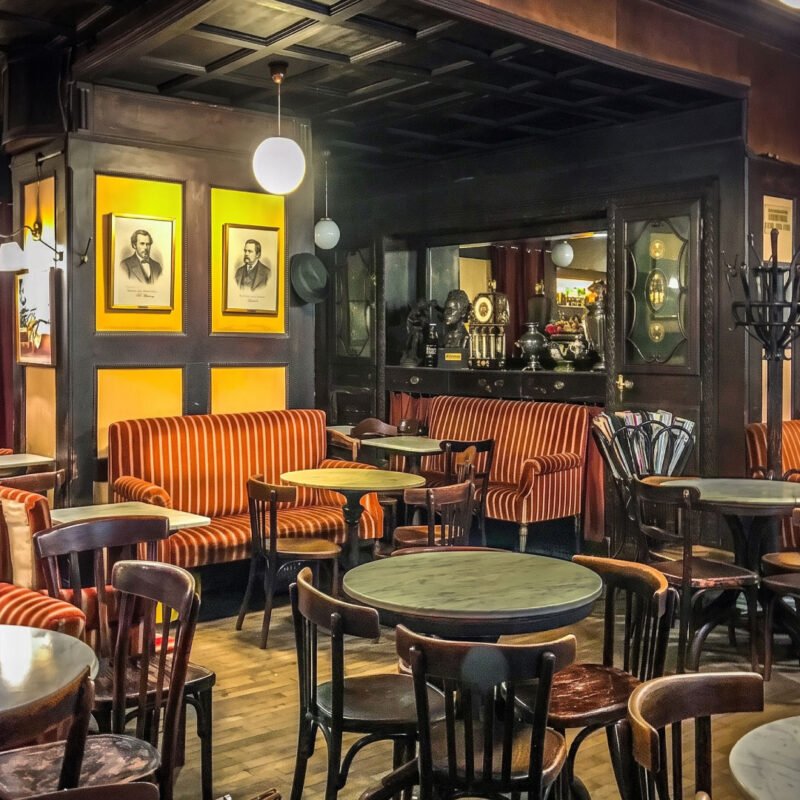
Location: Dorotheergasse 6, 1st district
Leopold and Josefine Hawelka opened it in 1939, and their grandsons still run it, along with the family roastery in the 23rd district. The worn wooden furniture and walls hung with art from grateful regulars haven’t been modernized, and the café earned its literary reputation honestly, as a postwar meeting point for writers and artists.
The one restaurant you should order from is Buchteln, yeast buns filled with plum jam, made fresh every evening to the original recipe. Its popularity and size restrictions mean quick seating and usually quick weekend booking, so book early on a weekday.
#3: Café Frauenhuber (EST. 1824)
Location: Himmelpfortgasse 6, 1st district
It was the name of the oldest still-existing house of coffee in Vienna, where Mozart and Beethoven were among its first tenants in the 1780s and 90s before the institution became a café.
It’s just a few minutes’ stroll on Kärntner Straße; prices are a bit higher than the prices in the central districts but definitely not as high as in the hottest places around, and there’s no flash at this place: unshowy booths, regulars and tourists, not one or the other.
Order a Melange or an Einspänner with apple strudel, the easiest recommendation if you are visiting the best coffee house in Vienna for the first time.
More Coffee Houses Worth Knowing
Café Bräunerhof
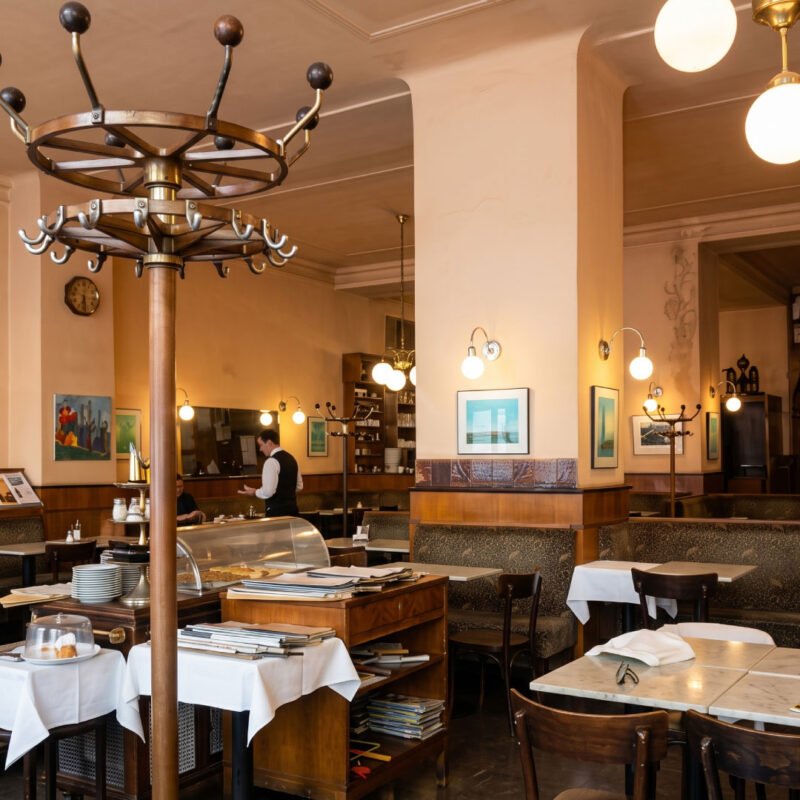
Thomas Bernhard’s regular café, in the Hofburg-adjacent antiques quarter. Quieter than its Herrengasse neighbors, with a small orchestra playing waltzes on Saturdays.
Café Prückel
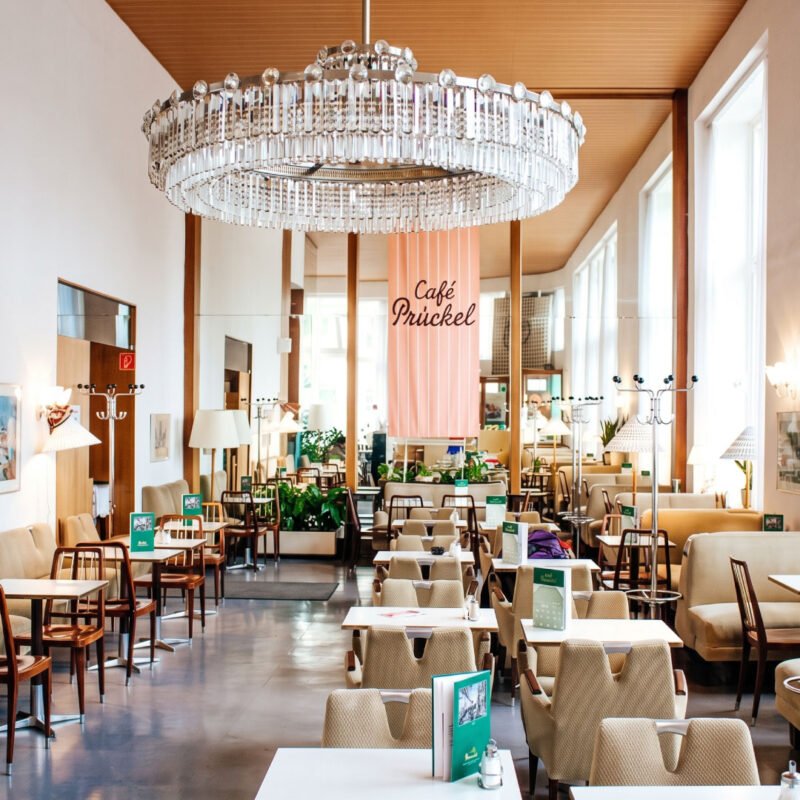
A rare mid-century room among Vienna’s imperial-era cafés, architect Oswald Haerdtl redesigned it in 1955. Opposite the MAK museum; piano plays Monday, Wednesday, and Friday evenings.
Café Diglas (Wollzeile)
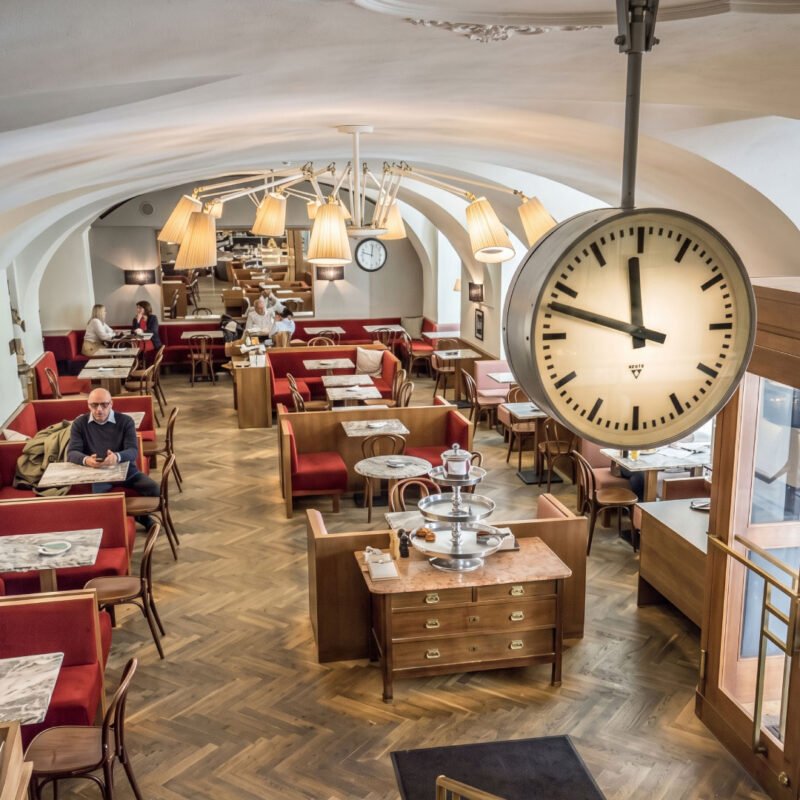
Steps from St. Stephen’s Cathedral, with red banquettes and no reservations, you must arrive before the lunch rush. Known locally for the Scheiterhaufen, a bread-and-apple pudding.
Café Schwarzenberg
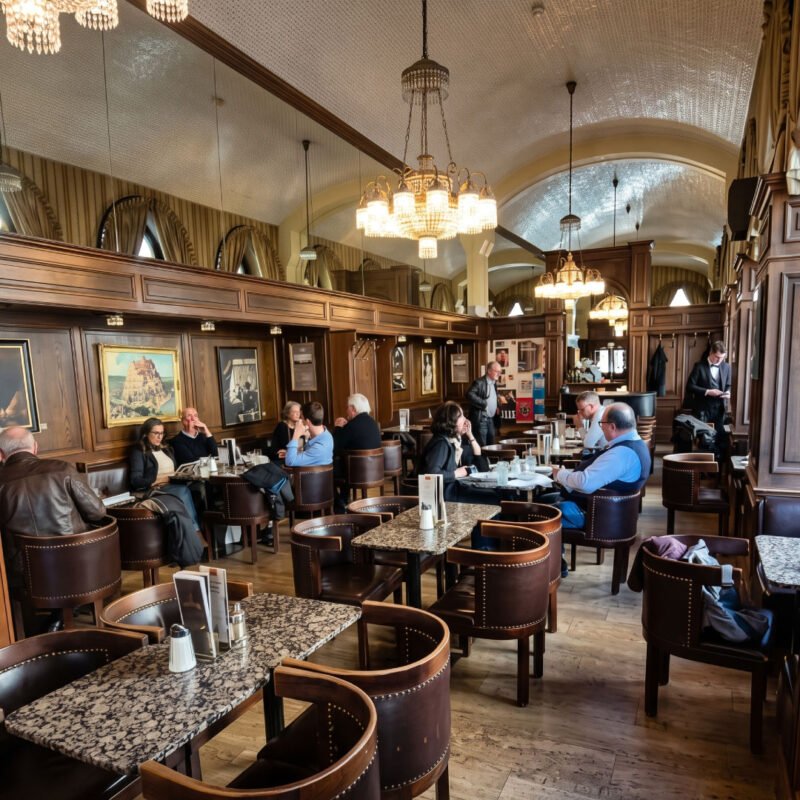
Launched in 1861, one of Austria’s most original 19th-century interior spaces, this old café is still in operation: The Damensalon, decorated by architect Josef Hoffmann, is certainly worth a visit as part of this house.
Café Museum
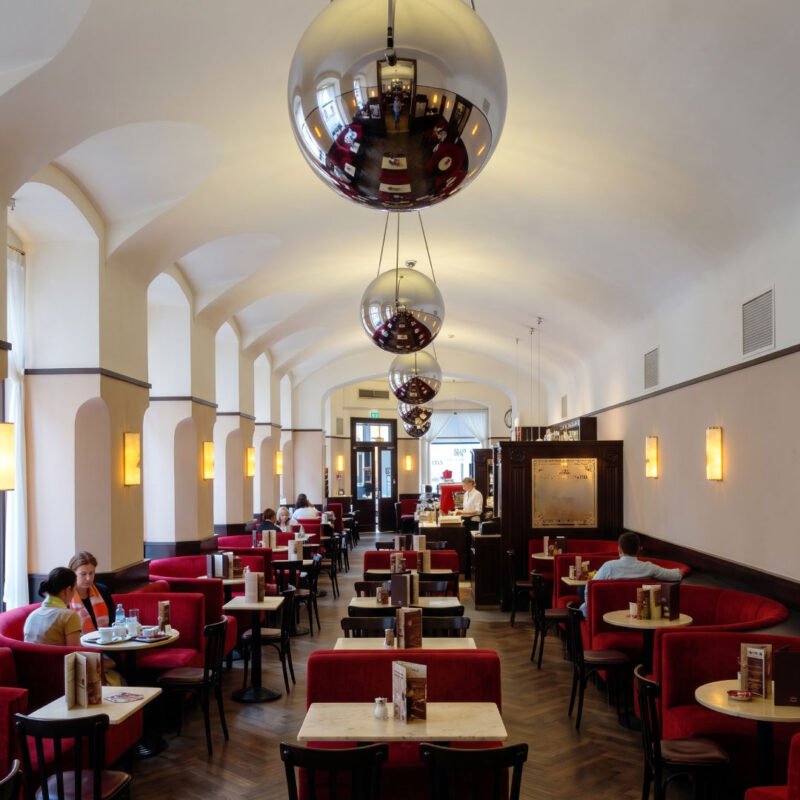
Adolf Loos’s first major commission, near the Opera and the Secession building, today’s interior reinterprets his stark 1899 original, but the artistic pedigree (Klimt, Schiele) is real.
Café Mozart
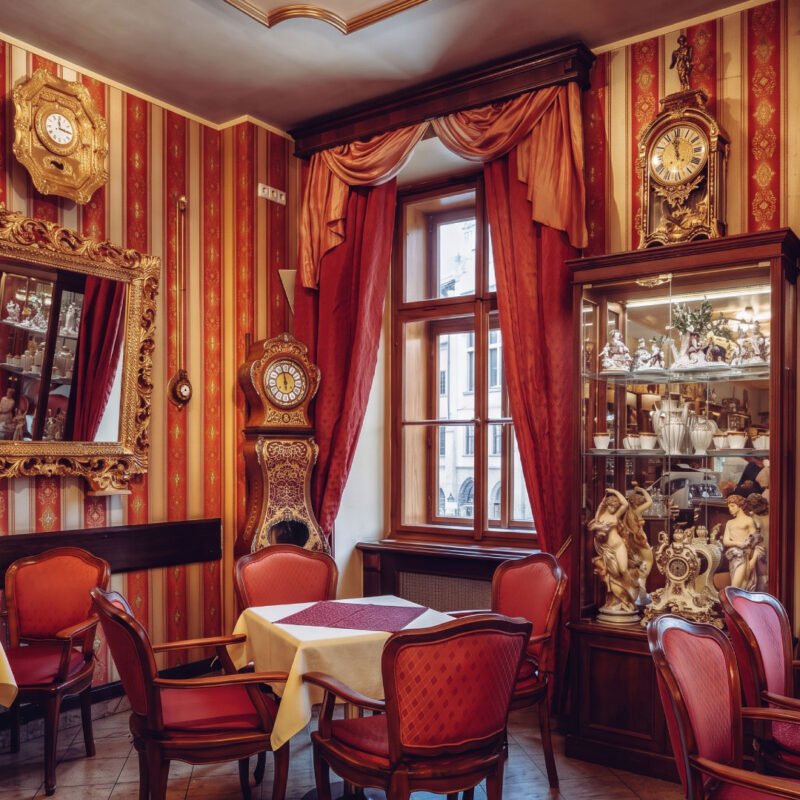
Opposite the Albertina and the State Opera, on a site with coffee houses dating to 1794. Its screen fame comes from The Third Man.
Café Jelinek
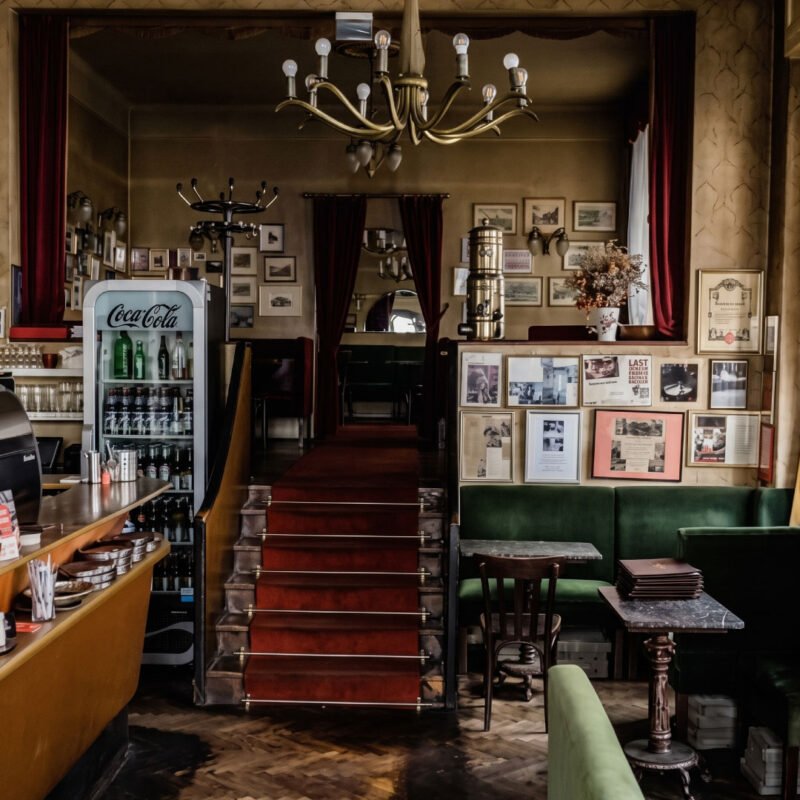
Off Mariahilfer Straße in the 6th district, wood-stove warmth and a regular crowd of locals escaping the shopping crowds. It’s worth the detour for the homemade Gugelhupf.
Demel
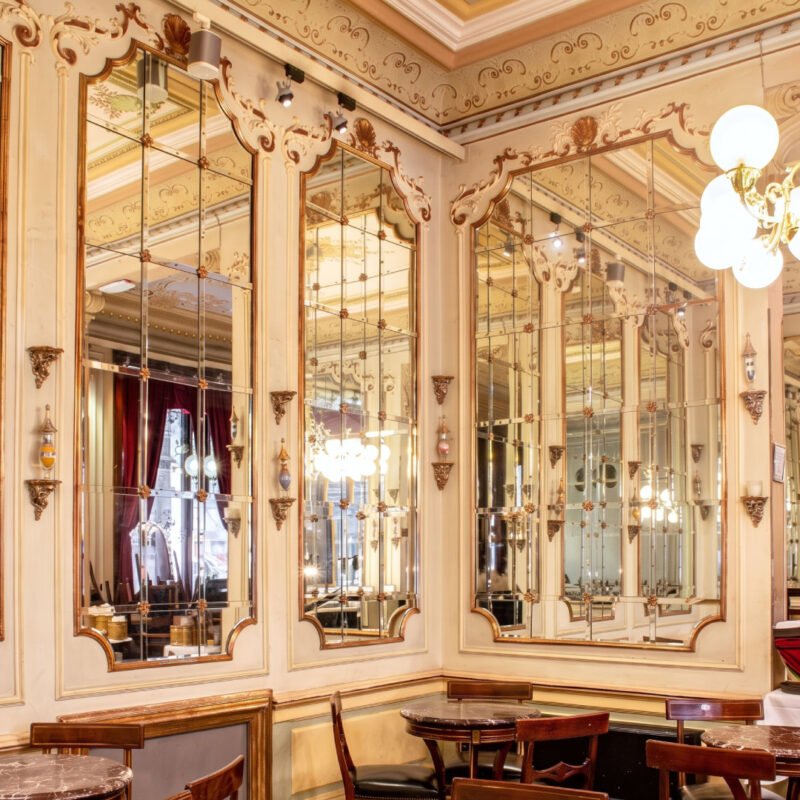
A Kaffeehaus, a Konditorei, quality bakery since 1786, Vienna’s former imperial confectionery. Come for the Kaiserschmarrn and cake counter, not an afternoon of newspapers.
Café Korb & Gerstner
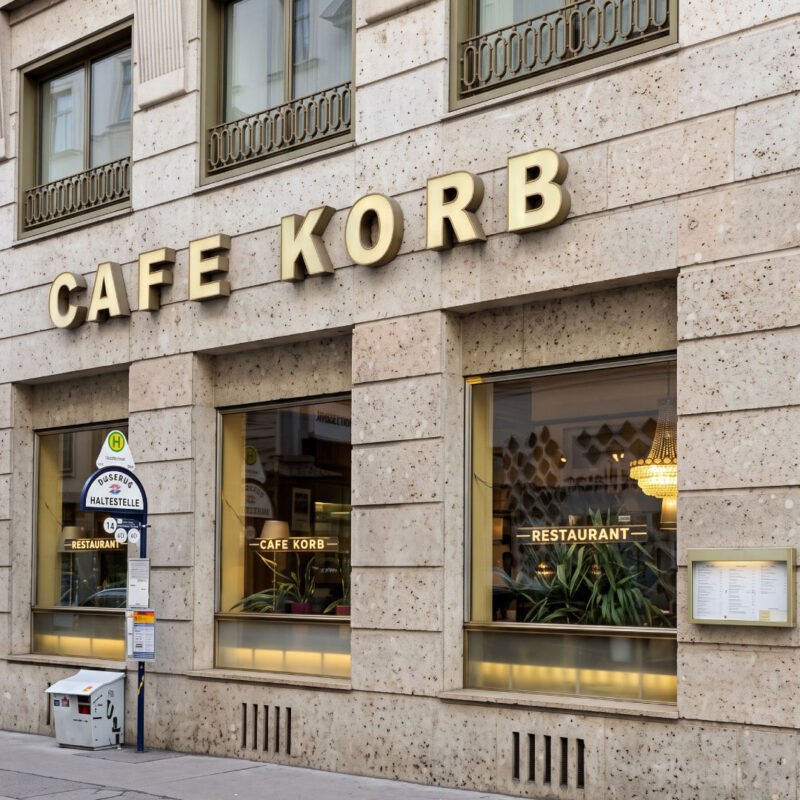
Like two more 1st-district names: Korb (duplex since 1904 close to Stephansplatz) that combines classic rooms with an artist-designed Artlounge or Gerstner (Kärntner Straße) that looks more like a formal patisserie than a lingering Kaffeehaus.
Café Central in 2026: Is It Worth It?
Central earned its reputation honestly. The room’s original Neo-Renaissance Palais Ferstel openings were opened in 1876, and it was here where the Vienna intelligentsia of the late 19th century met: Freud, Trotsky, Altenberg, Schnitzler, they were regular visitors, and the vaulted arcades and marble columns inside still exude their presence. It’s a true story and a line-up.
The various adaptations being made to old infrastructure, heating, electrics, fire protection, etc. are not aimed at the historic interior in any way. As the architect supervising the refurbishment stated, the renovation’s aim is unknown to anyone.
Café Central is 100% worth a visit – just not now. Visit it before the autumn season, which unfolds differently from time spent working on tasks on the computer: sitting for an hour at Café Sperl or Café Frauenhuber, thinking about it.
What Should You Order in a Viennese Coffee House?
Please order by name, not by the term ‘coffee’ or ‘cappuccino’.
Coffee
- Melange – Espresso with steamed milk and foam; it’s most similar to a cappuccino.
- Einspänner) – Brewed strong black coffee with a large frothy head in a glass.
- Kleiner / Großer Schwarzer – Microscopic / Macroscopic Black Coffee (Espresso-based)
- Kleiner/ Großer Brauner- The same, adding a splash of milk or cream.
- Verlängerter – A milder, Americano-style black coffee.
- Fiaker – Black coffee topped with rum, named after the Vienna carriage drivers.
Pastries and Cake
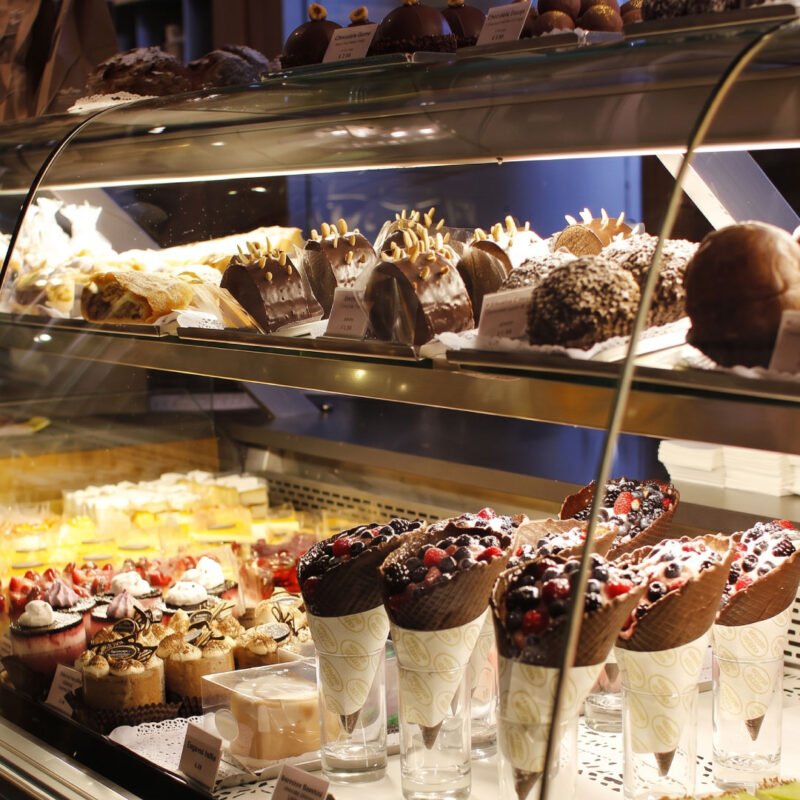
- Sachertorte: A dense cake made of chocolate and a layer of apricot jam, Vienna’s most well-known export.
- Apfelstrudel: The order that is easy to get right, the order that everyone has for apples, strudel, thin pastry: hard to get wrong, easy to get right, apfelstrudel.
- Gugelhupf: A ring cake with marbles, sometimes the more “local” selection instead of Sachertorte.
- Buchteln: Sweet yeast buns stuffed with jam and made every evening, a speciality of Café Hawelka.
None of this is a test. Waiters expect hesitation, and every café in this guide has an English menu. If ever in doubt, a Melange, or any cake in the window, is always an order of 100% right anywhere in the city.
Vienna Coffee House Etiquette
These habits will help you avoid the impression that you are a tourist.
- Seat yourself unless there’s a host stand or a visible queue
- Reservations exist but aren’t the norm outside dinner service or peak Central-style crowds.
- Order from the waiter at your table, not a counter; the traditional houses don’t do counter service
- One drink genuinely does buy you the table for as long as you want it; thirty minutes or three hours are both normal
- Laptops are tolerated in a few modern-leaning cafés but still considered mildly out of place in the classic rooms
- When you’re ready to leave, catch the waiter’s eye and say “Zahlen, bitte” (the bill, please); tip by rounding up roughly 5-10%
Building a Best Coffee House in Vienna Experience
Two Hours, One Stop
If you’re exploring Vienna Old Town, a traditional coffee house is the perfect place to take a break between sightseeing. Go there using St. Stephen’s Cathedral as a landmark, then stroll 5 minutes to Café Frauenhuber or Café Diglas for hot melanges and Strudel slices, and don’t miss any sightseeing!
A Half-Day Loop
After the previous day’s meals and washes at the Hofburg or Michaelerplatz, morning coffee at either Café Bräunerhof or Demel, then a visit to the Albertina, the State Opera, which will then be followed by a lighter breakfast at Café Mozart, on Albertinaplatz.
Worth the Detour
If you’ve already tried the central café but want the real deal locals go to, consider one of these two to avoid the first: Café Sperl (near Naschmarkt) or Café Jelinek (off Mariahilfer Straße). Not really a reason to make either trip on its own, but both pair well with a Naschmarkt visit or an afternoon of shopping. Café Jelinek is also a great stop if you’re spending the afternoon shopping in Vienna around Mariahilfer Straße.
A Short Crawl, Not a Feast
Each of the three cafés, the Café Bräunerhof, the Café Diglas and the Café Frauenhuber, is within walking distance from the other two in the 1st district, so that the atmospheres can be compared to each other. Remember, it’s not always sunshine and rainbows; one coffee per location doesn’t have to be a sitting; after all, it’s enough to bring a bit of contrast to each location.
In winter, a traditional coffee house is also the perfect place to warm up after visiting a Vienna Christmas Market.
Explore Vienna Beyond the Best Coffee House
Visiting a traditional Kaffeehaus is one of the most authentic things to do in Vienna, especially if you want to experience the city’s culture at a slower pace.
A good coffee house visit and a good sightseeing route solve the same problem in Vienna – how to see a lot without rushing.
Libra Tours’ private, vintage-styled electric carriages depart from the Burgtheater and cover the same ground as this guide, the Hofburg, the Ringstrasse, the Opera district, at a pace that leaves room for an unhurried stop.
The Classic tour is 45 minutes (first-time visitors should take this tour together with a stop at Café Frauenhuber), and the Premium tour is 1 hour long with free drinks provided (candidates could have this tour as a part of a slower day starting or ending at Café Sperl or Demel).
All tours are in groups with a live guide, and you will not be caught off guard by a fixed schedule that limits enjoyment from the second cup.
For a complete Viennese food experience, pair your coffee house visit with a meal at one of the places serving the best schnitzel in Vienna.
Frequently Asked Questions (FAQs)
Q: What is the best coffee house in Vienna?
A: In 2026, the majority of visitors will arrive to enjoy the 1880s café interior, the authentic local and traveler patronage, and a true nonexistent line at Café Sperl: an 1880 coffee house. The title would normally go to Café Central, which is renovated until autumn ’26.
Q: Is Café Central worth visiting?
A: Yes, when it re-opens in autumn 2026. The Palais Ferstel setting and the entire 19th-century literary history there are authentic, and yes, it may take 20-40 minutes to reach it, even after renovation.
Q: Where do locals drink coffee in Vienna?
A: Café Jelinek near Mariahilfer Straße and Café Sperl in front of Naschmarkt have largely local customers and are located in neighborhood cafés outside the 1st district. Locals also use these popular names, usually outside peak hours.
Q: What should I order in a Viennese coffee house?
A: A safe bet is a Melange (espresso and some steamed milk). If you want something more robust, get an Einspänner (black coffee with whipped cream) or ask the server for a house suggestion.
Q: How long can you sit in a Vienna coffee house?
A: You can take it as long as you want! After buying one drink, you will have the table for the day in a traditional coffee house, and no one will bother you or suggest that you drink more or go home.
Q: Which coffee house is best near St. Stephen’s Cathedral?
A: The multitude of cafés (Café Frauenhuber around 5 minutes off Kärntner Straße and Café Diglas on Wollzeile) are in close range to the cathedral, and it doesn’t take too long to fit in a sightseeing stop without making a lengthy detour.