Hidden Gems in Vienna | 13 Off-Beat Non-Touristy Experiences
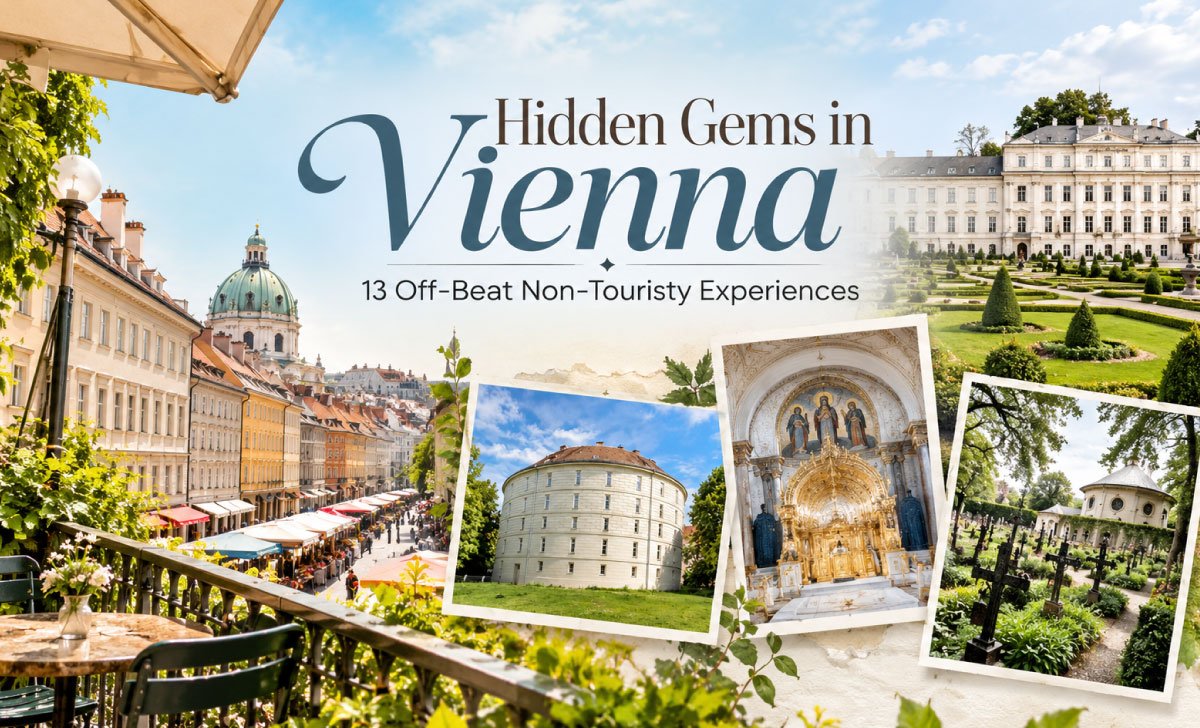
Most people plan on exploring the cool places in Vienna with the same list of places to explore. By the second or third day, that list is finished, and Vienna, it turns out, has a great deal left to say.
We are not using “Hidden gem” here loosely. Almost nothing in this article is a secret. Locals know everything we have mentioned; it’s just that you might not have touched on these places while planning your Vienna itinerary.
What these places share is that they sit outside the standard first-time itinerary, reachable, well documented, but rarely on the way to anything else a visitor has already planned to see. That’s a different claim than “undiscovered,” and a more honest one.
13 Hidden Gems in Vienna You Must Explore
Below is the list of quirky things to do in Vienna:
#1: The Third Man Museum
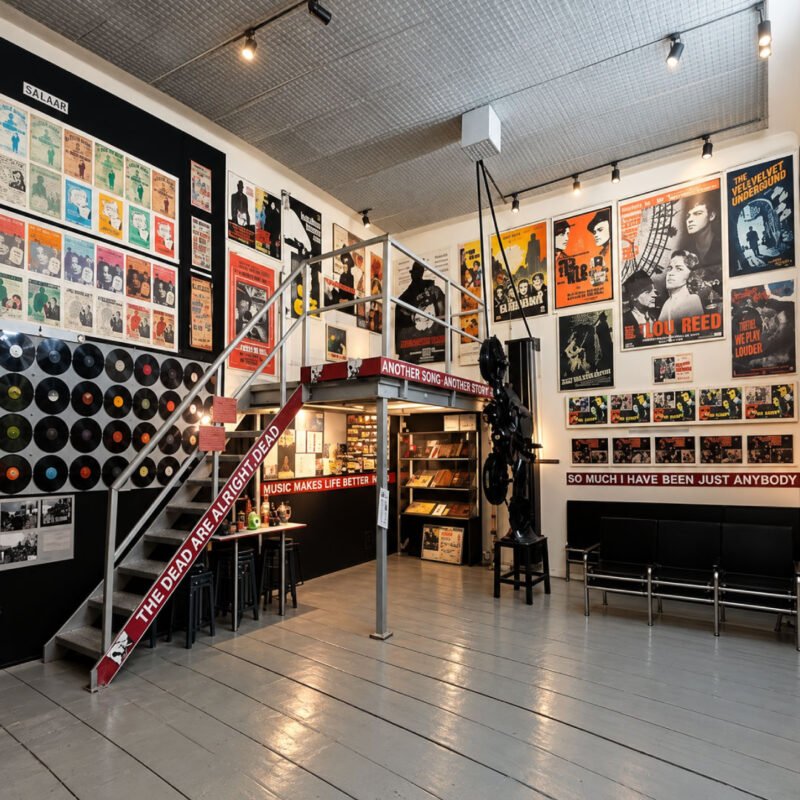
Why it’s Overlooked: It will not be included on hop-on-hop-off tours or timed entry applications; it only has one opening slot each week.
The Experience: A 4-person private collection in the 4th district (Wieden) celebrating the 1949 film by Carol Reed, as well as the dark black-market Vienna years in which the film’s sewers and shadows were actually lived; the real history behind the film’s sewers and shadows.
Where: Pressgasse 25, Wieden.
Time Needed: 1-1.5 hours.
Best For: Film fans, WWII history readers, and anybody interested in Vienna from 1945 to 1955.
Good to know: Individual visitors are welcome Sat. afternoon, 2- 6 p.m., and private tours are available on other days by request. Confirm hours on the museum’s own site before going.
#2: The Cemetery of the Nameless
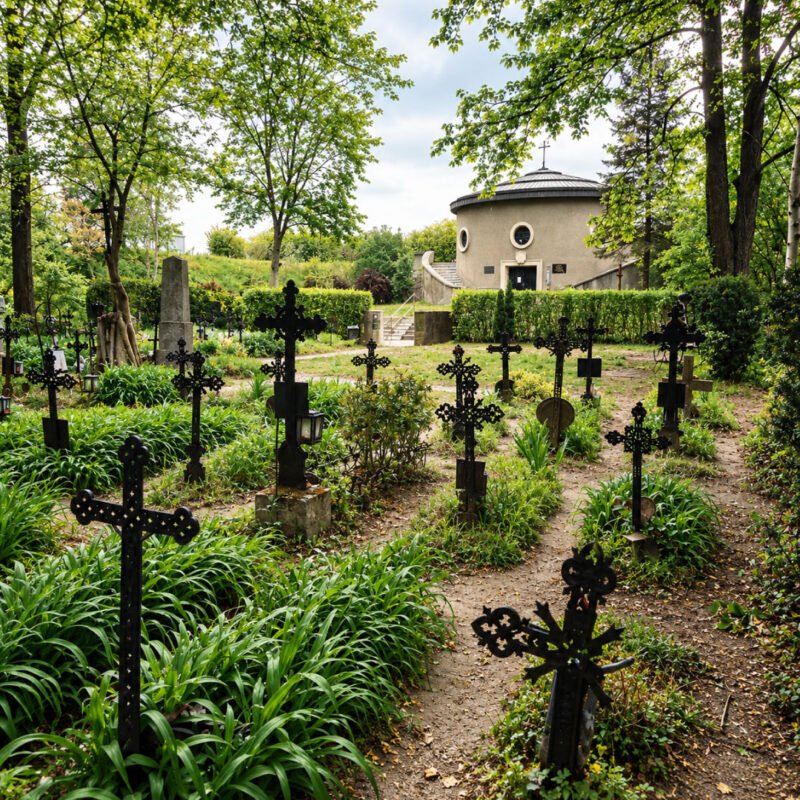
Why it’s Overlooked: There’s a 45-minute journey to an industrial harbour on the city’s outskirts, but nobody stumbles upon it.
The Experience: A tiny riverside cemetery where, until the turn of the Danube in the 1940s, bodies were washed ashore from 1840 onwards and provided with a plot and a plain iron cross, with or without a name. It’s small, can be taken in 15 minutes, and has a lingering atmosphere.
Where: Albern, 11th district, beside Alberner Hafen.
Time Needed: 30-45 minutes, plus travel.
Best For: History buffs who are willing to take a detour; not family-friendly.
Good to Know: Free, no set hours. Take the U3 to Enkplatz, then bus 76A to Alberner Hafen; check the stop carefully, as there’s more than one “Alberner” stop nearby.
#3. Vienna’s Central Cemetery, beyond the composers
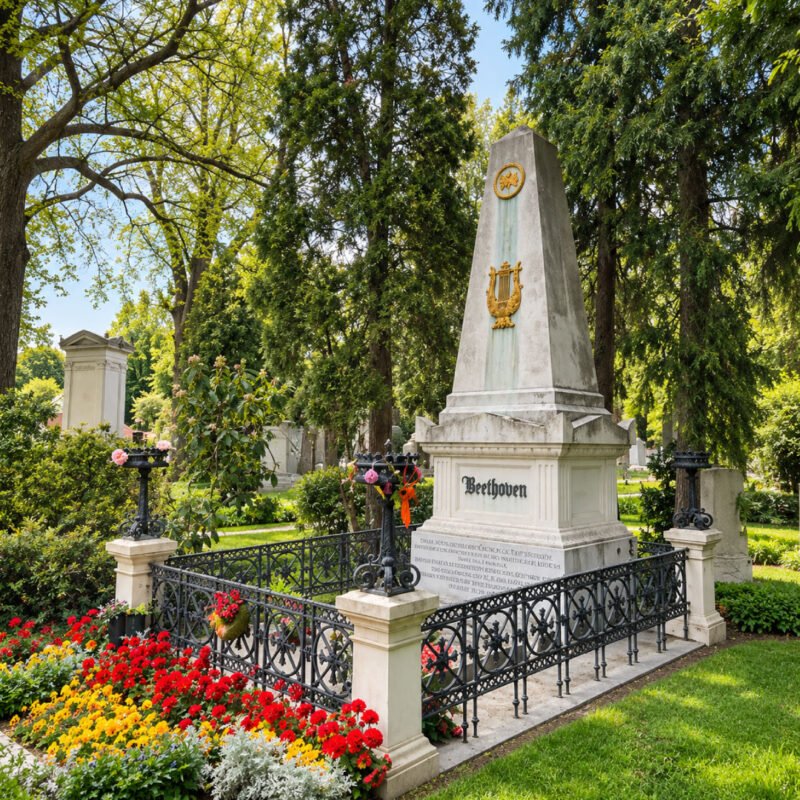
Why it’s Overlooked: Most visitors who make the trip out go straight to the Beethoven and Mozart memorials and leave. The rest of the grounds, 2.5 million square metres of it, goes unseen.
The Experience: Wander past the Jugendstil Lueger Church, the overgrown old Jewish section, the Russian Orthodox chapel, and, underneath one of the ceremonial halls at Gate 2, the Funeral Museum, which lays out Vienna’s old fixation with a “schöne Leiche,” a beautiful corpse, through coffins, mourning dress, and funeral carriages.
Where: Simmering, 11th district.
Time needed: 1.5–2 hours spent in the cemetery and the museum.
Best for: History buffs and architecture buffs; travelers who aren’t afraid to get a little dirty.
Good to Know: Entry to the cemetery is free, but the museum requires a ticket; this is seasonal and may be closed during certain times of the year–check the schedule before visiting.
#4: The Nussberg Vineyards Above Nussdorf
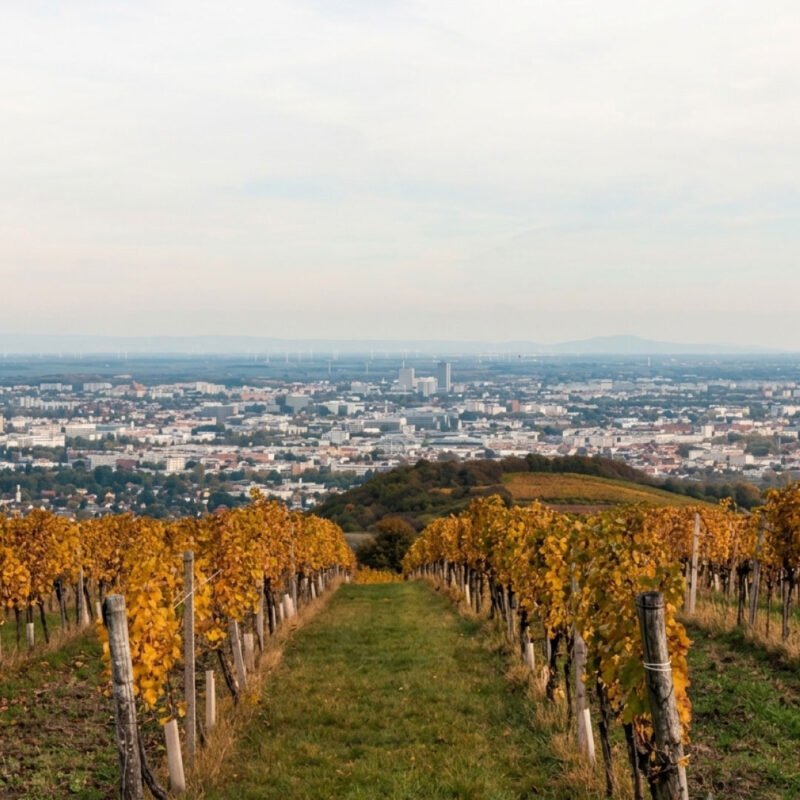
Why it’s Overlooked: Kahlenberg gets the tour buses for its viewpoint; the vineyard paths one level down are walked mostly by Viennese.
The Experience: The hiking trail Stadtwanderweg 1 from Nussdorf at the end of the tram line D winds its way through working wine gardens to a section of new-harvest wine and cold cuts at rustic wine taverns – the entire city and the Danube are visible below.
Where: Döbling, Nussdorf/Nussberg, 19th District.
Time Needed: 2-3 hours for a gentler version of the walk, with stops.
Best for: Couples, walkers, anyone who wants to experience cool places in Vienna without paying for one.
Good to Know: Heurigen here run on their own logic; many are seasonal or weather-dependent, so check ahead rather than count on a specific one being open.
#5: Augarten
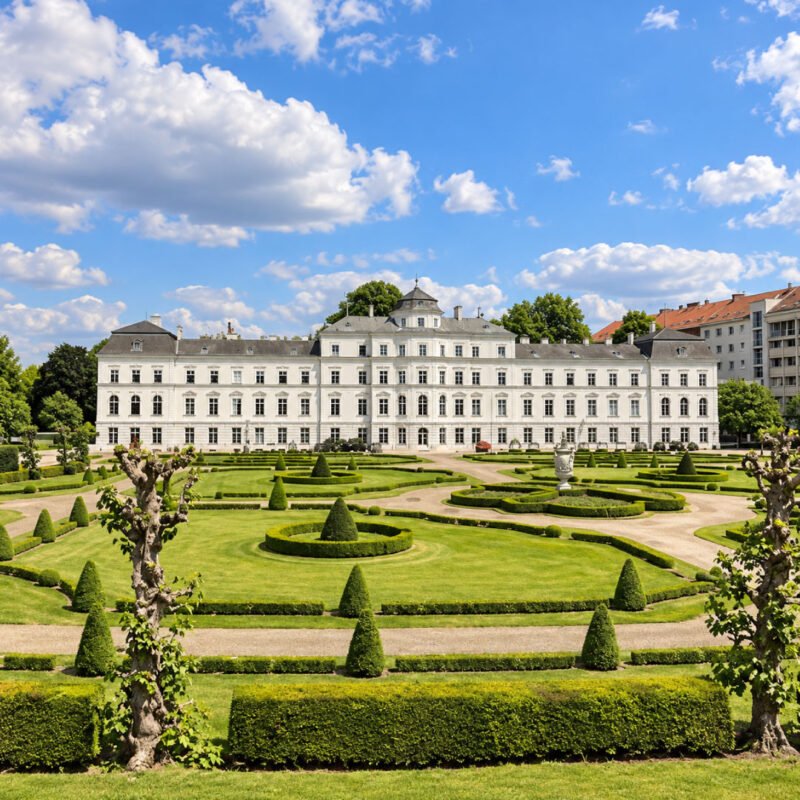
Why it’s Overlooked: This is a real baroque park, a couple of tram stops from the centre, but not on any list of must-see places, let alone Schönbrunn’s gardens and the Belvedere’s.
The Experience: In the very authentic old Baroque garden of Vienna, light is spilled by the broad, paved roads and small side streets, nestled near Europe’s original second-oldest porcelain factory in Vienna, which was established in 1718. It is home to a museum, and the short factory tours offer an opportunity to see the artisans hand-painting each piece.
Where: Leopoldstadt, 2nd district.
Time Needed: 30 minutes for the park alone; add an hour for the manufactory tour.
Best For: Anyone wanting a slower morning, plus craft and design enthusiasts.
Good to Know: The park is free and open 24 hours. The porcelain museum is open from Monday to Saturday from 10 a.m. to 5 p.m.; manufactory tours are not booked more than a few weeks in advance and are confirmed on-site several days a week.
#6: Brunnenmarkt and Yppenplatz
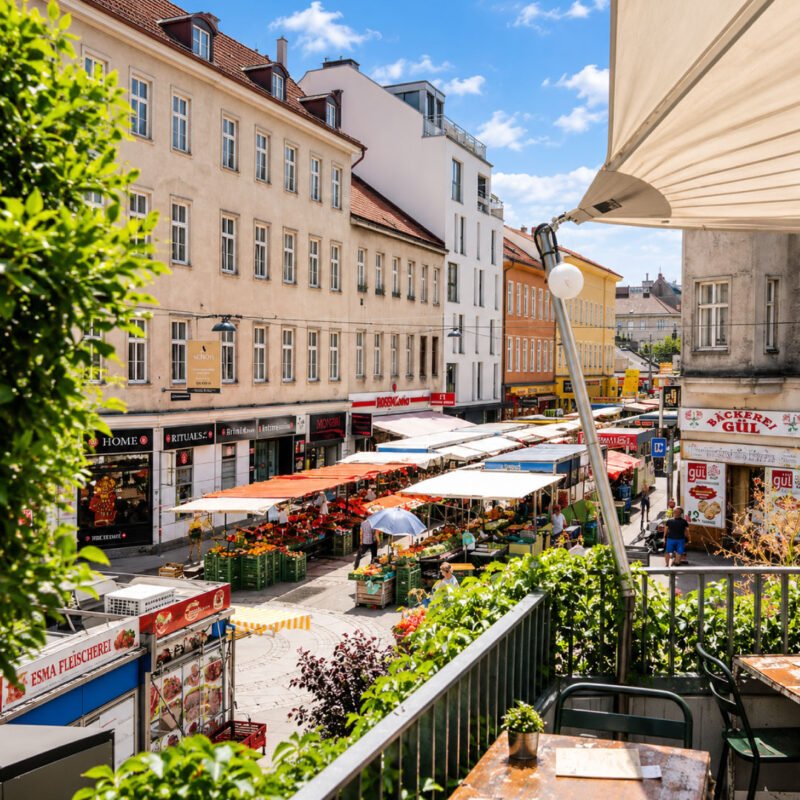
Why it’s Overlooked: It is not a market street; it’s a working-class street; it’s not a food hall—it’s not designed to be.
The Experience: Almost a kilometer of permanent stalls in the direction of Ottakring selling produce, spices, flatbreads, and cheese to a neighbourhood that is predominantly Turkish and Balkan. At the northern end, Yppenplatz turns into cafés and a Saturday farmers’ market.
Where: Ottakring, 16th district.
Time Needed: 1-1.5 hours.
Best for: People whose lives revolve around food and people who travel and want to go somewhere where they can be served, not just tourists.
Good to Know: Open Monday-Saturday; go on a Saturday morning for the fullest version, but expect real crowds, not a leisurely browse.
#7: Kirche am Steinhof
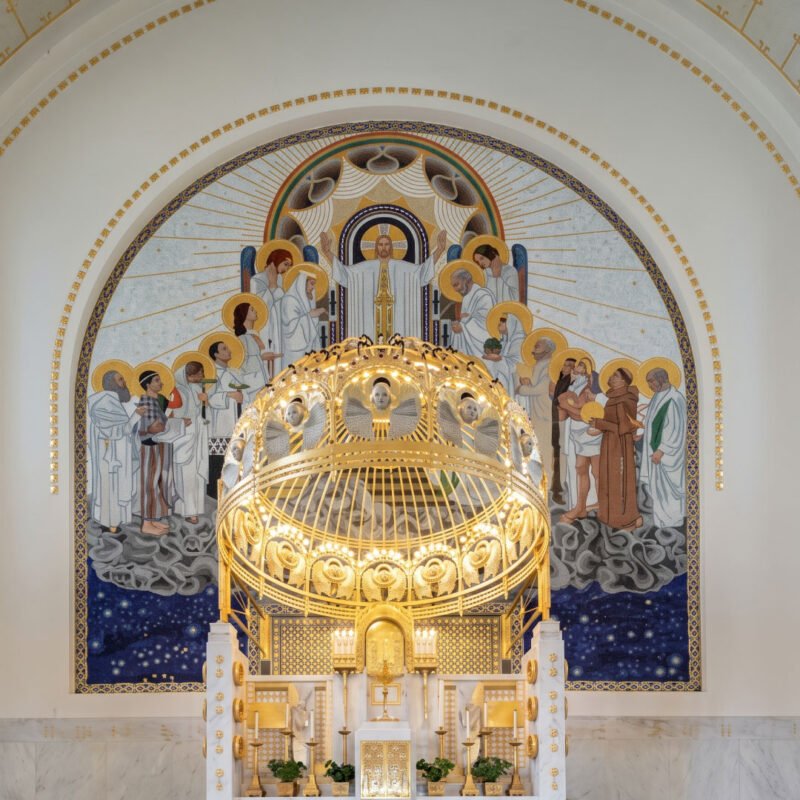
Why it’s Overlooked: Located in the 14th district, on a hospital hill, there are only visiting hours that work if you plan around them.
The Experience: The psychiatric hospital chapel, which was also designed by Otto Wagner in 1907, is gold-domed on the outside and lined on the inside with stained glass by Koloman Moser, one of the most obvious single declarations of Viennese Jugendstil in the city.
Where: 14th district, namely Baumgartner Höhe, Penzing.
Time Needed: 1 hour, more with a guided tour.
Best For: Architecture and design lovers.
Good to Know: The hours for visits are seasonal (mostly Tuesday to Sunday afternoons) and vary from year to year (see the current schedule at the Wien Museum in 2011 – March to October).
#8: The Narrenturm
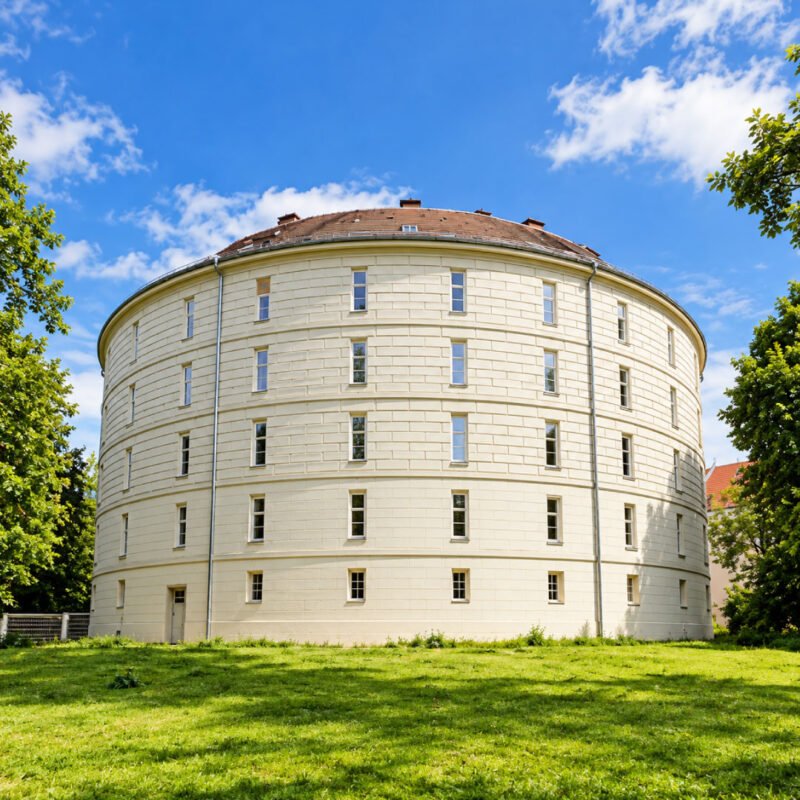
Why it’s Overlooked: Four half-days a week, inside a university medical campus most visitors never walk through.
The Experience: A cylindrical 1784 building, continental Europe’s first purpose-built psychiatric institution, that now holds the Natural History Museum’s pathological-anatomical collection. It’s genuinely strange: old cells, renovated into modern display rooms, tracing the history of disease.
Where: Alsergrund, 9th district, old AKH campus.
Time Needed: 1 hour.
Best For: Adventurous travellers with a robust stomach; not for young kids.
Good to Know: According to the museum’s own website, it is open from 10 am to 5 pm on Wednesdays-Saturdays; actual hours are subject to change, so please visitnhm. at for current information.
#9. The Servitenviertel
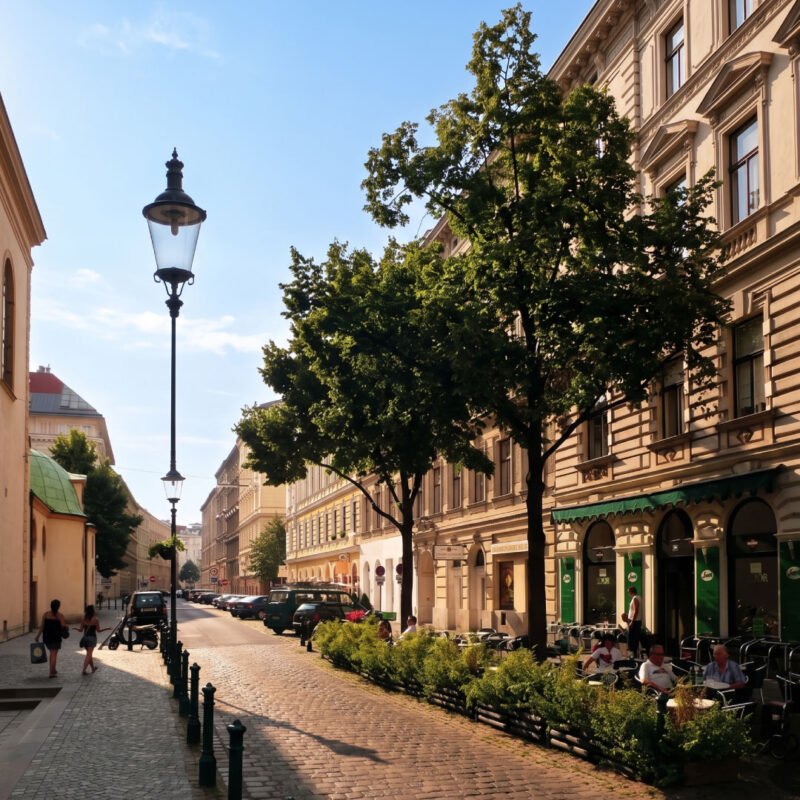
Why it’s Overlooked: It is not far from the Ringstrasse, but no personality can be found that attracts people’s attention and invites them to walk around rather than to check it off.
The Experience: An unobtrusive grid of streets around the Servitenkirche, a modest baroque church, featuring independent shops, small squares, and a village atmosphere. Berggasse, on its edge, was Sigmund Freud’s street for almost 50 years; his old consulting rooms are still there, but the neighbourhood is worth it even without going in.
Where: Alsergrund, 9th district.
Time Needed: 1-1.5 hours to wander.
Best For: Repeat visitors, people who love architecture, who have already visited the historic centre.
Good to Know: No tickets, no set hours, this is a walk, best done slowly, ideally with a coffee stop.
#10: Alte Donau
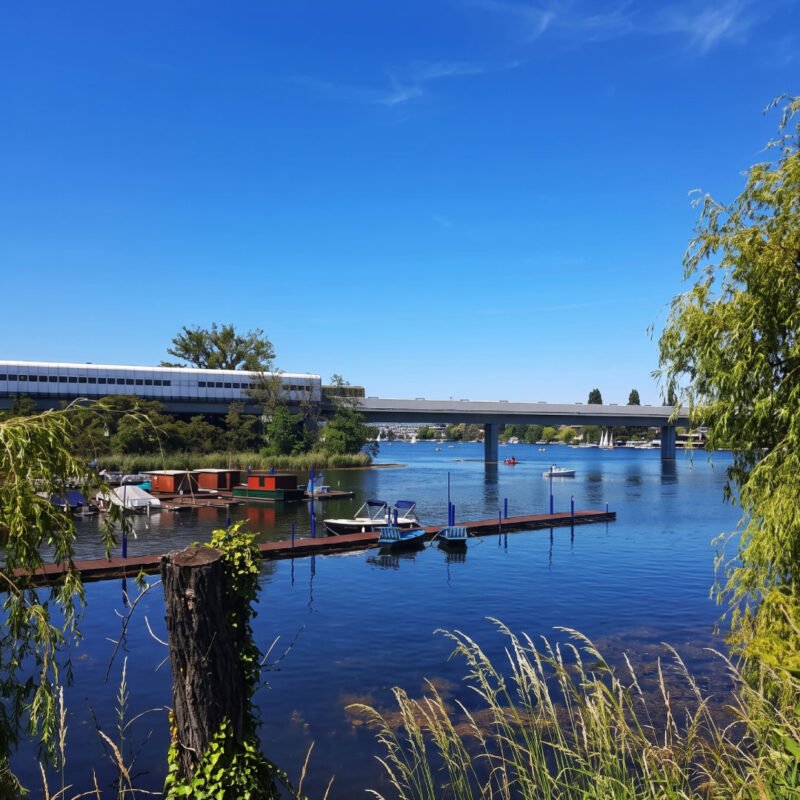
Why it’s Overlooked: Not a postcard of Vienna, so it won’t appear on the itineraries when taking photos, etc., but that’s the beautiful thing about Vienna.
The Experience: The unobtrusive, backwater stretch of the Danube, with boat rentals to be enjoyed by anyone, small beaches, little lawns for Viennese families to spend their summer days on & can be a wintertime skating rink when frozen.
Where: The border area between Leopoldstadt/Donaustadt (21st/22nd Districts).
Time Needed: More than 2 hours (more if you take a boat out).
Best For: Families, summer visitors – For everyone who wants to see how Vienna lives and wants to experience the non-touristy things to do in Vienna.
Good to Know: Directly accessible from the U1 (Alte Donau or Kaisermühlen-VIC stations); the swimming season is approximately May through September, and at other times of year it is very quiet.
#11: Spittelberg
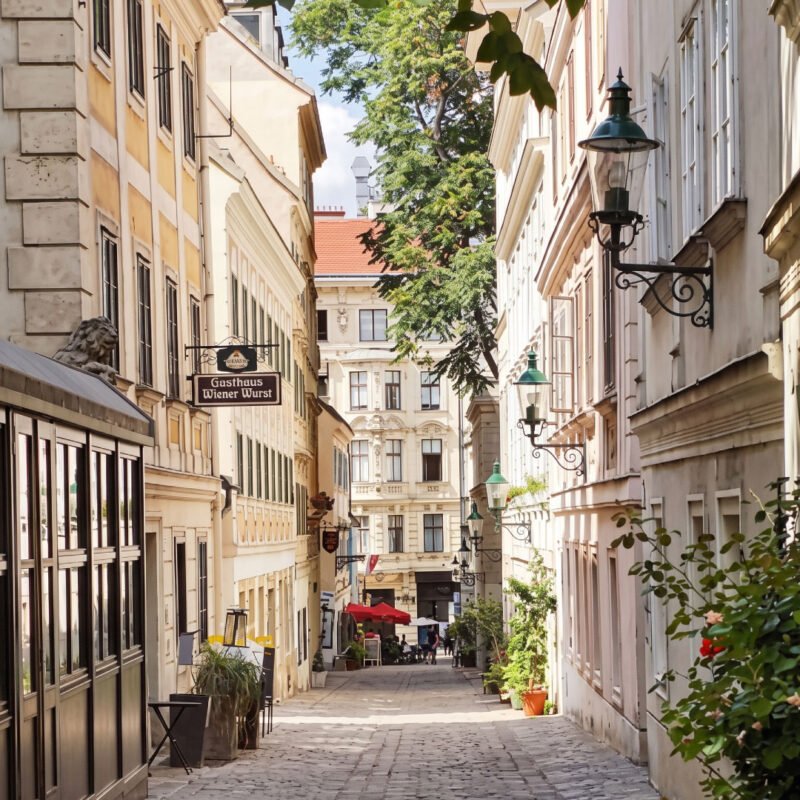
Why it’s Overlooked: Many people walk by but don’t get into any of the side streets, which are directly behind the MuseumsQuartier.
The Experience: A pocket of early-19th-century Biedermeier houses on cobbled, often pedestrian lanes, as it was once a red zone, but now it is a small gallery or artisan shops and quiet courtyards. It’s most famous and popular in December when it hosts a Christmas market, but has fewer people around it all year.
Where: Neubau, 7th district.
Time needed: This will take approximately 45 minutes to an hour.
Best for: Couples, photographers, and anyone else wanting to visit the museum in the afternoon/evening before opting for a more relaxed afternoon/evening destination.
Good to Know: Always open, no ticket required; outside the Christmas market weeks, evenings are especially quiet.
#12: The Old Cemeteries of Döbling and Heiligenstadt
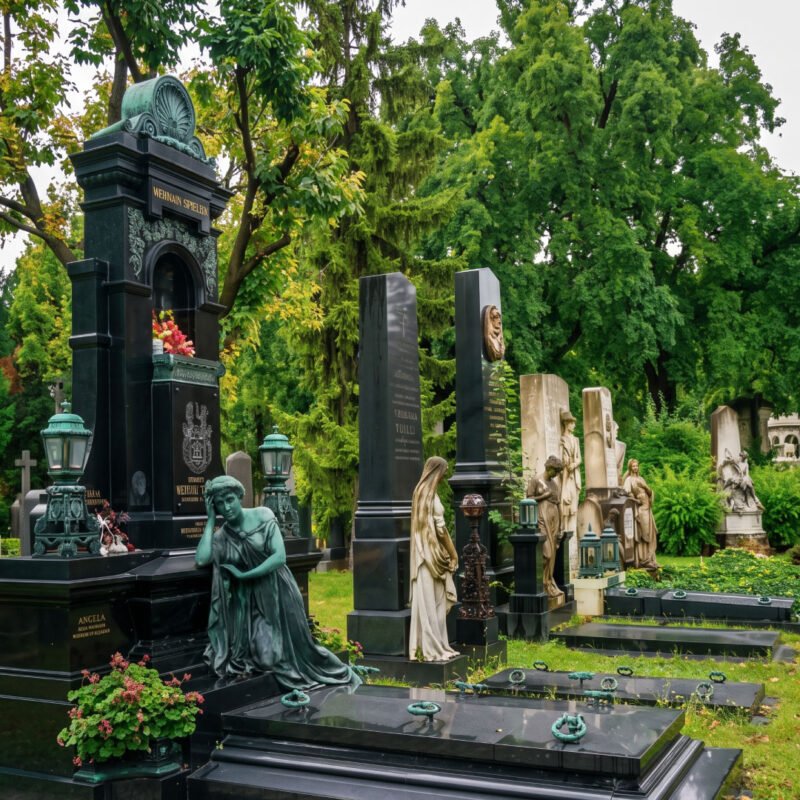
Why it’s Overlooked: Small district cemeteries rarely make any list, hidden-gem or otherwise, next to the scale of the Central Cemetery.
The Experience: Modesty and greenery prevail in the northern districts of Vienna’s vineyards, where a variety of famous and completely private gravesites are overlaid, ranging from a Formula 1 driver to generations of local families. They are quieter and homey than the Zentralfriedhof.
Where: 19th district, Döbling or Heiligenstadt.
Time needed: 30-45 minutes.
Best for: It’s for vineyards and for people who already like this cemetery, and it’s not a trip unto itself.
Good to Know: Free entry, usually open during the day; best combined with a walk on the Nussberg as they are located nearby.
#13: Loos American Bar
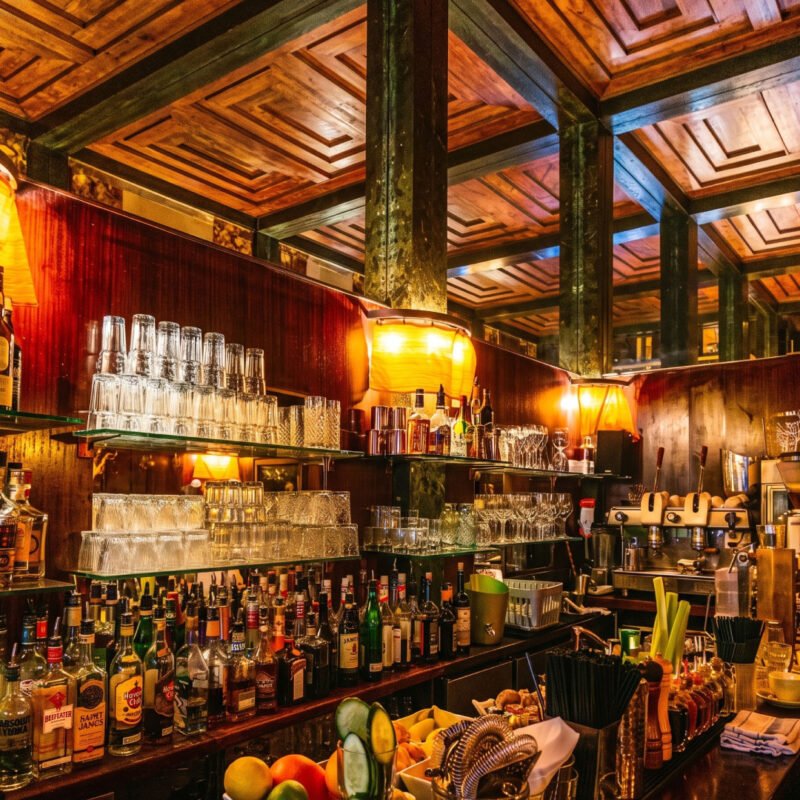
Why it’s Overlooked: It is located right in the centre, a minute from Kärntner Straße and, let’s be honest, almost unnoticeable; there is no sign, only a small doorway.
The Experience: The bar, with a floor area of just nine square metres, was designed by Adolf Loos in 1908 and is one of the earliest and purest examples of Viennese modernism: dark wood, brass, mirrors, doubling this small space into something far larger. Please remember this is a working bar, NOT a museum.
Where: 1st District – Innere Stadt – Kärntner Durchgang 10.
Time needed: 30-60 minutes
Best for: Design lovers, couples who wish to take a quiet evening off, repeat visitors.
Good to know: It is a working bar; evening hours are meant for time, as big things can be full-size bookings the following day; a bunch is fine.
Fitting These into a Real Vienna Trip
One Day
Pick one or two experiences close to wherever you’re already spending the day; Spittelberg pairs naturally with the MuseumsQuartier, the Servitenviertel with a morning near the Ringstrasse.
Two to Three Days
Select three to four unique things to do in Vienna and leave the order to the geography students, and don’t attempt to visit all of the districts. It’s a logical day without a lot of adjustment to the time zone: A morning at Brunnenmarkt, an afternoon at the Central Cemetery, an evening at Loos American Bar.
Four or More Days
This is where it’s worth going further out: Nussberg, the Cemetery of the Nameless, Alte Donau- experiences that need more travel time but show a side of Vienna that has nothing to do with the Habsburgs.
None of this is an argument for skipping Schönbrunn or Stephansdom. It’s what to add once you have.
Hidden Gems in Vienna, or Just Overlooked?
Worth separating the two. A hidden gem here doesn’t mean secret; it means a place that’s genuinely interesting, reasonably easy to verify and visit, and simply outside the route a first-time visitor is usually handed.
Some, like the Third Man Museum, are well documented and even prize-winning; they’re just easy to miss because of a narrow opening window. There are those like Spittelberg who are hiding in plain sight, mere minutes from a place not far from which anyone experiences. In Vienna, there are no secrets, only those you’ve thought up.
Another way to learn how the layers of the city line up is to take a private ride to the historic centre with Vienna old town, Libra Tours. Our private tour guide in Vienna will reveal what is going on behind each façade, and then head outside to explore the city on foot further.
Frequently Asked Questions (FAQs)
Q: What are the best hidden gems in Vienna?
A: Located at the Third Man Museum, Nussberg’s vineyards and the Cemetery of the Nameless are unique places that provide a more authentic version of the well-known sights rather than a touristy one.
Q: What are some non-touristy things to do in Vienna?
A: Visiting Brunnenmarkt, the Servitenviertel and the Central Cemetery of Vienna, apart from the composers, presents a Vienna different from the one in most tour guides.
Q: What are the most unique things to do in Vienna?
A: The combination of a psychiatric-hospital-turned-pathology-museum, vineyard strolls, and a nine square metre-long Adolf Loos bar is not very common in other cities. It is unusual for a range.
Q: Are Vienna’s hidden gems worth visiting if I only have a few days?
A: Yes, but it could be too much at a high level. Choose one or two, not several that take you all over the city, that are near what you are already planning to see or do.
Q: Where can I experience local Vienna, away from the crowds?
A: The easiest way to catch a glimpse of everyday Vienna is in neighbourhood markets, such as Brunnenmarkt, or in the residential cemeteries in Döbling or in quiet quarters like the Servitenviertel.
Q: What should I do in Vienna after I’ve seen the main attractions?
A: Choose which category you want to visit, rather than attempting to cover all the categories, such as unusual museums, local markets, quiet architecture, etc.