Best Churches to Visit in Vienna | Complete List & Itinerary
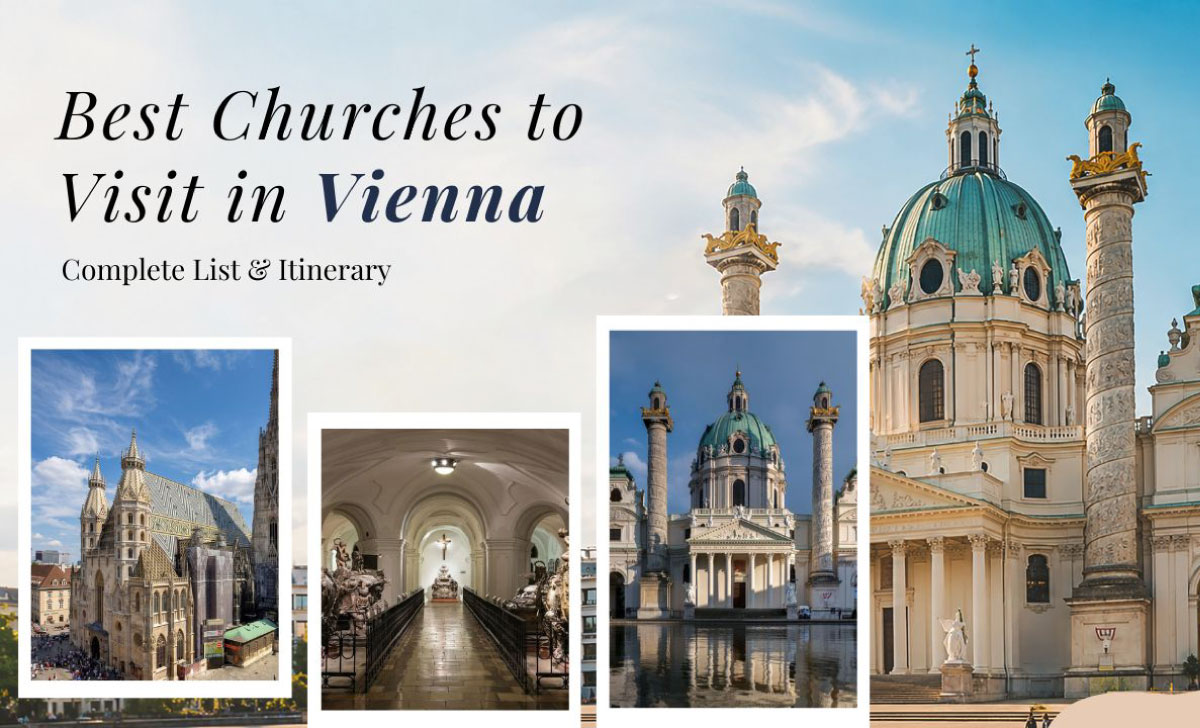
You may have traveled a lot & witnessed that every city has churches as its secondary attraction, but Vienna is different.
Vienna has churches that are aesthetic, classic & timeless, all at once. In a city built by an empire that took religion as seriously as it took architecture, Vienna’s churches are often more impressive than the palaces next door.
Continue reading this guide, and you’ll learn about the best churches to visit in Vienna, plus the most aesthetic yet hidden churches that tourists majorly miss, & yes, a practical itinerary for fitting them into a Vienna trip of any length.
Why Are Vienna’s Churches Worth Visiting?
Vienna’s churches earn their reputation because they read like a walkable timeline of the city itself:
- Romanesque foundations under Ruprechtskirche
- Gothic spires on St. Stephen’s Cathedral and Minoritenkirche
- Baroque theatre at Karlskirche and Peterskirche
- A raw concrete landmark at the Wotruba Church
Very few European capitals fit that much architectural range into a single afternoon’s walk.
For close to a thousand years, Vienna’s rulers used churches to make statements the way other capitals used monuments; the Habsburgs are buried across three separate sites in the city, body, heart, and organs kept apart, because one tomb was never grand enough.
That history is still legible in the buildings: naves built to overwhelm, interiors gilded to impress visiting dignitaries, and one deliberately unadorned concrete church built decades later to ask what a house of worship should look like at all.
Most are still working parishes, too, so the atmosphere inside is closer to a living building than a museum exhibit; you must know before you go- dress code included.
9 Best Churches to Visit in Vienna (Worth Your Time)
#1: St. Stephen’s Cathedral (Stephansdom)
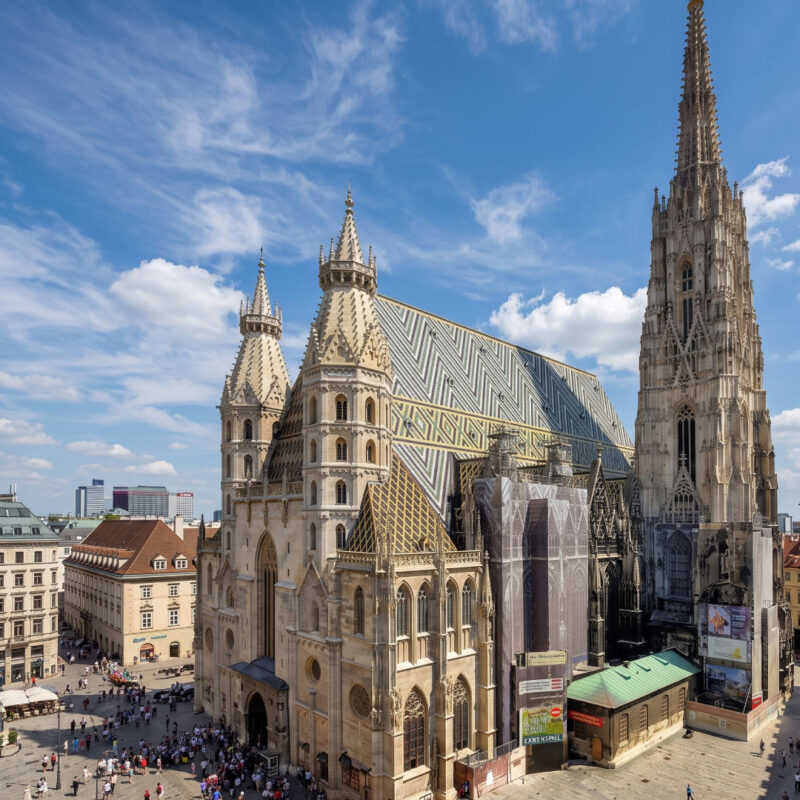
Stephansdom is the Gothic highlight and unofficial emblem of Vienna; the South Tower of 137 metres (“Steffl”) dominates much of the Innere Stadt since the 12th century, when it was constructed as the seat of the archbishop of Salzburg.
Only the nave is open to visitors; the catacombs, the elevator to the North Tower leading up to the Pummerin organ ascend to the top of the tower (343 steps) and the elevator to the North Tower to reach the top for the viewing of the Pummerin bell are ticketed separately.
Budget two hours for all three, and arrive right at opening to beat the Vienna tours; this is Vienna’s essential first-time-visitor stop, for good reason.
- Address: Stephansplatz, Innere Stadt
- Tickets: Free, towers & catacombs ~€7-8 each
- Time: Mon-Sat 9-11:30 & 1-4:30, Sun from 1pm
#2: Karlskirche (St. Charles Church)
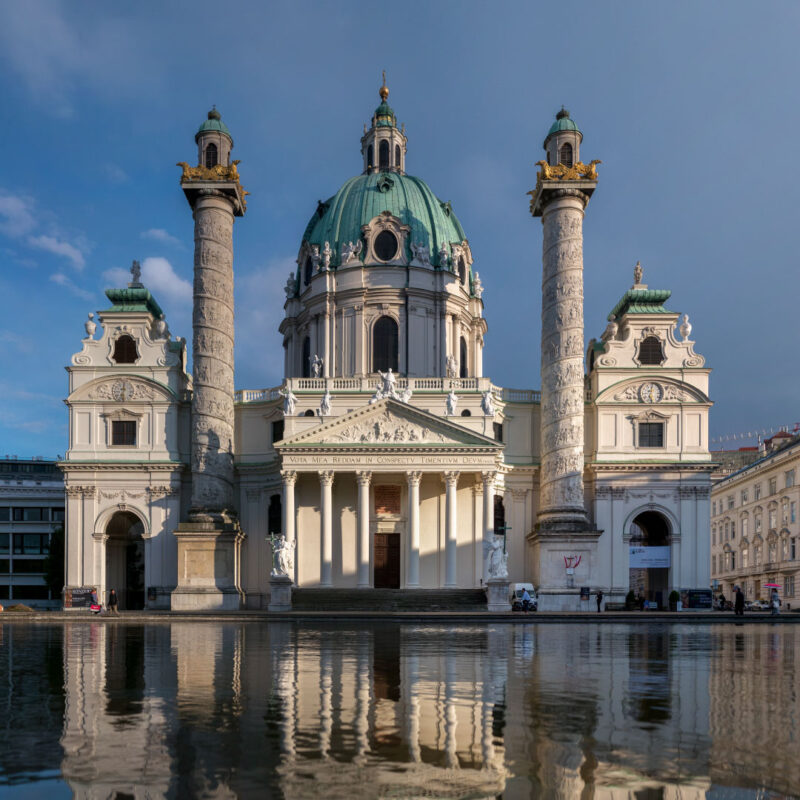
When their citizens recovered from the plague of 1713, Emperor Charles VI promised to construct this church, which became the finest Baroque church in Vienna, even more sumptuously decorated than St Stephen’s by the 72m dome, frescoed by Johann Michael Rottmayr.
Karlskirche’s superlative feature is its glass panorama elevator, which will take your visitors inside the dome, allowing them to look eye to eye with the fresco and the rest of the rooftops. Admission covers the elevator, treasury, and organ loft.
Evening Vivaldi and Mozart concerts here are genuinely excellent, and in December the church backs directly onto the Karlsplatz Art Advent market, one of the city’s best Christmas markets for handmade crafts. It also pairs perfectly with a Vienna night tour after sunset.
- Address: Karlsplatz
- Tickets: ~€9-10 (students less, under-10s free) · includes dome elevator
- Time: Mon-Sat ~9 am-6 pm, Sun from ~11 am
#3: Peterskirche (St. Peter’s Church)
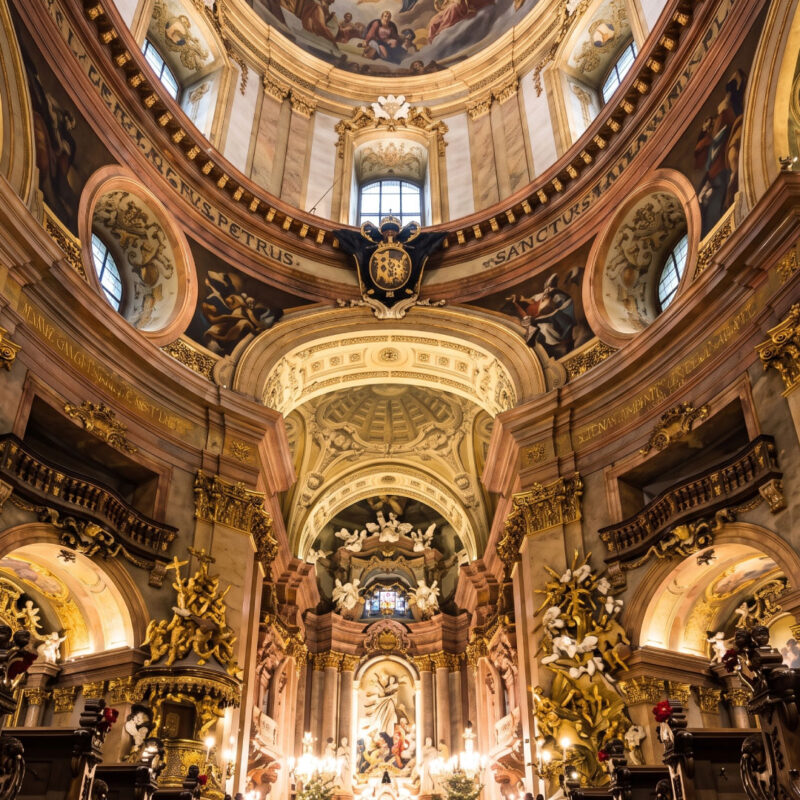
Easy to overlook and seemingly out of place, tucked just a little off the corner of the Graben, Peterskirche manages to contain so much baroque drama in its small, oval footprint, gilded galleries, vast dome, and small scale, as opposed to Karlskirche’s.
Anyone can enter throughout the year, and the best time to stop by is for “Orgel um Drei,” a free half-hour organ recital that takes place most afternoons at 3 pm; sponsors welcome. Ticketed evening concerts by the Classic Ensemble Vienna add Mozart and Vivaldi under gold leaf.
For a free church experience in the city centre, this is arguably the best one on the list.
Address: Petersplatz, just off the Graben
Tickets: Free (evening concerts ticketed separately)
Time: Daily, free organ recital ~3 pm
#4: Votive Church (Votivkirche)
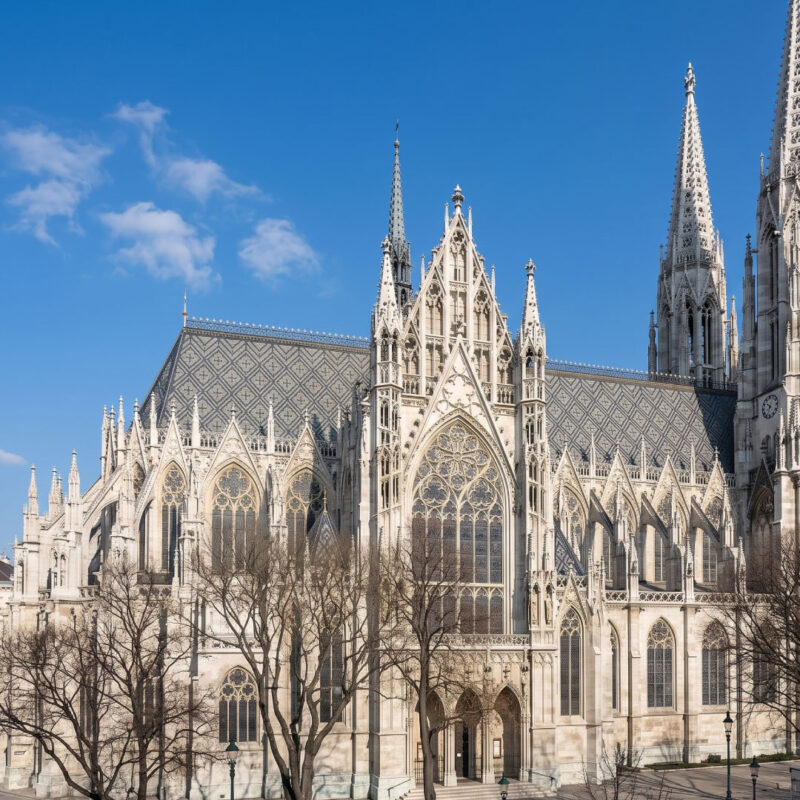
Votivkirche is a neo-Gothic church, the twin spires reaching almost 99 metres high—after an assassination attempt on Emperor Franz Joseph I in 1853, and one of the Ringstrasse’s most photographed attractions.
Although the building is of the 19th century, its stained glass and stone tracery is clearly medieval Gothic.
- Address: Ringstrasse, near the University of Vienna
- Tickets: Free access
- Time: Check current parish hours before visiting
#5: Minoritenkirche (Minorite Church)
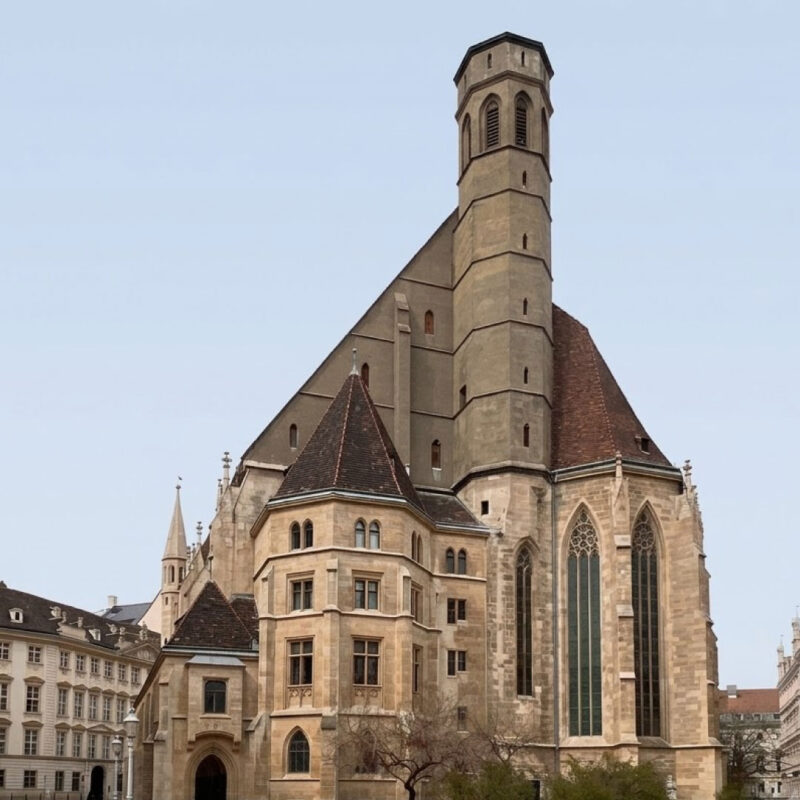
Minoritenkirche is the oldest Gothic church in Vienna, and can be underestimated from the exterior, an unpretentious grey-and-black facade from a secluded square of the 13th century.
The interior features an almost life-size mosaic copy of Leonardo Da Vinci’s Last Supper, which was originally commissioned by Napoleon and found too large to go in the Belvedere.
That’s why it’s one of the quietest squares in the Innere Stadt and rarely featured in first-time lists; it’s a real gem in the crown land!
- Address: Minoritenplatz, near the Hofburg
- Tickets: Free
- Time: Daily, standard church hours
#6: St. Rupert’s Church (Ruprechtskirche)
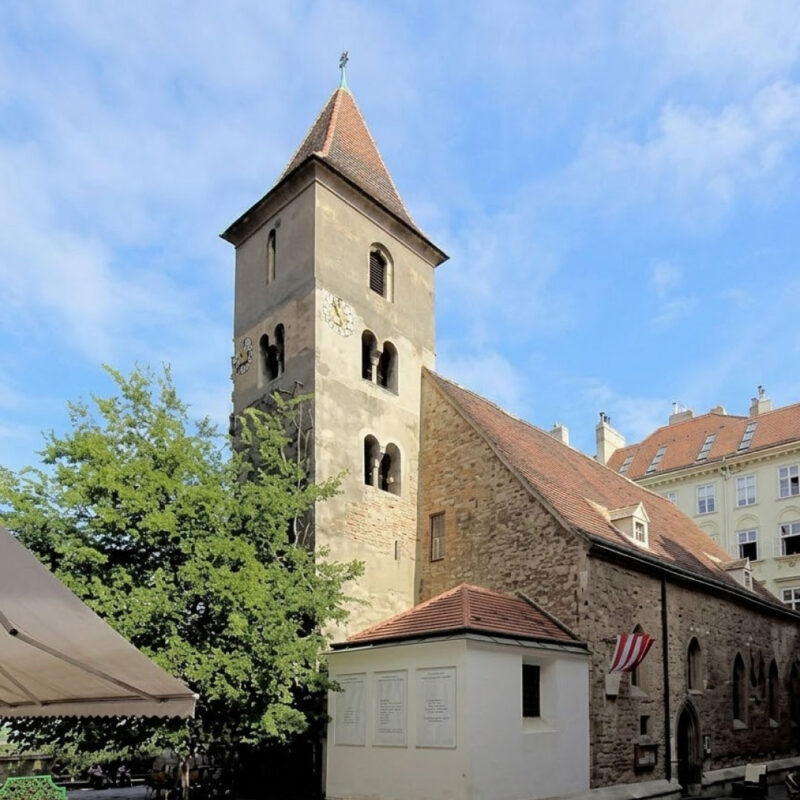
As legend has it, it is the oldest Vienna church, constructed circa 740 AD and featuring a Romanesque tower and nave, built in the 11th century AD, respectively. It sits above the Danube Canal at the edge of the “Bermuda Triangle” nightlife district, small, plain, and often nearly empty, which is exactly the appeal.
Opening hours are limited and irregular, so treat a visit as a bonus if you’re passing rather than a fixed stop, but if the door happens to be open, it’s one of the most atmospheric five minutes in the Vienna city tour.
- Address: Ruprechtsplatz, above the Danube Canal
- Tickets: Free
- Time: Limited & irregular, check ahead
#7: Augustinian Church (Augustinerkirche)
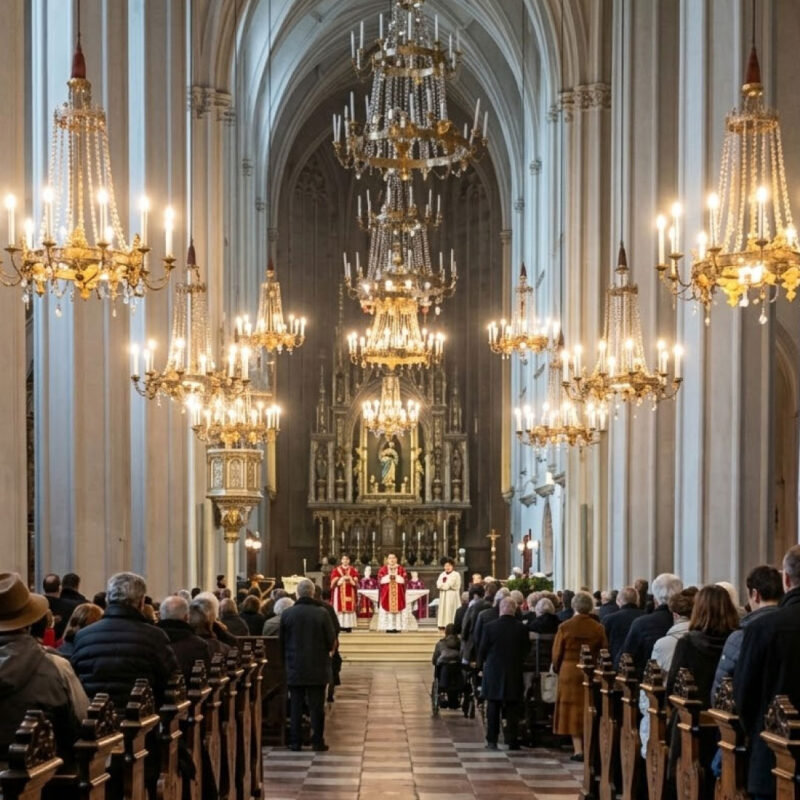
The Habsburgs’ parish church for close to 300 years, Augustinerkirche was the site of Franz Joseph and Elisabeth’s (“Sisi’s”) 1854 wedding, among others, inside the Hofburg complex.
The Chrysostegia, a little vault housing silver urns with the hearts of 54 Habsburgs, is its most outstanding feature, which can be visited after the Sunday 11 am High Mass, which is worth attending on its own because of the complete choir and orchestra playing in settings by Schubert, Haydn and Mozart.
This is free entry and the relatively sober interior sets off the Baroque gravestones and monuments even more starkly.
- Address: Josefsplatz, inside the Hofburg complex
- Tickets: Free (Herzgruft visit by donation)
- Time: Daily, High Mass Sunday 11 am
#8: Capuchin Church & Imperial Crypt (Kapuzinerkirche & Kaisergruft)
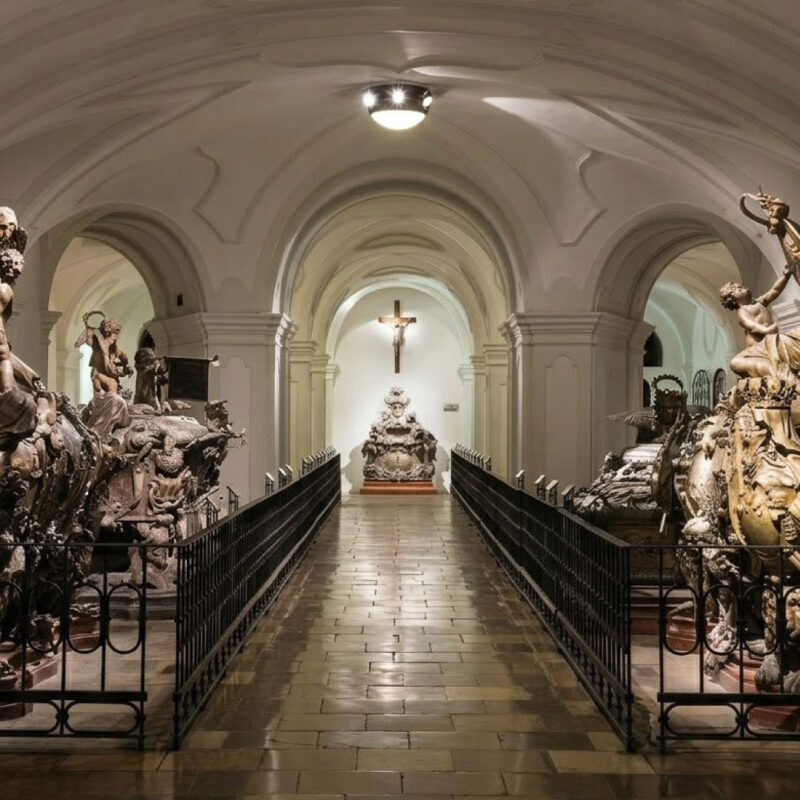
Capuchin Church is modest from the street at Neuer Markt. Still, it beckons to all visitors as the site above the real reason for visiting: the Imperial Crypt, the resting place for 12 emperors and 18 empresses, and the two-sized sarcophagus inhabited by bustling Elizabeth (aka Sisi), the daughter of Leopold II.
Our Vienna sightseeing tours can be experienced in such a way that they explore the stories behind selected Tombs. It’s the single best stop in the city for understanding the Habsburg dynasty as people rather than portraits, sombre, but never morbid, and closer in tone to a museum than a memorial.
- Address: Neuer Markt
- Tickets: ~€8 adults
- Time: Daily, roughly 10 am-6 pm
#9: Wotruba Church (Church of the Most Holy Trinity)
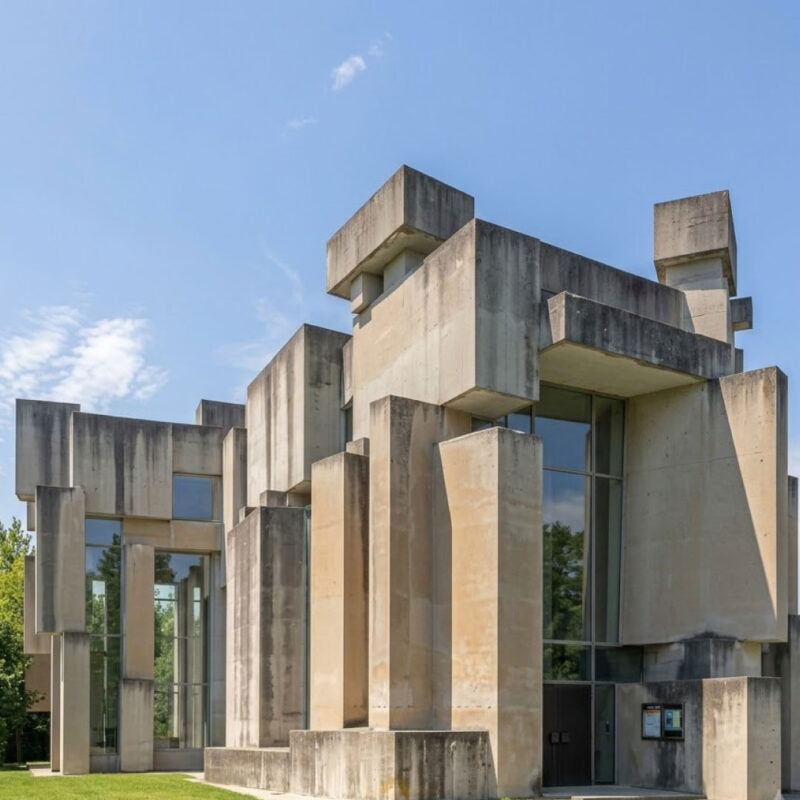
When designing this list, I thought we were all entitled to a fresh approach from time to time – here it is anyway: 152 raw concrete blocks stacked in an uneven row on the slope of a hill in the district of Liesing, sculpted by Fritz Wotruba and erected in 1976.
A sculpture and one of the most photographed pieces of brutalist architecture in Europe; with light falling through the cracks between blocks, it can’t be done in any baroque interior.
Hours are limited to weekends; pair the trip with the wooded trails behind it for a half-day that looks nothing like the rest of a Vienna itinerary.
- Address: Georgenberg hill, Liesing district
- Tickets: Free
- Time: Sat ~2-6 pm, Sun ~9 am-4:30 pm
Visitor Tips Before Entering Churches
Most Vienna churches are free to enter, but a few rules apply everywhere:
- Entry: It’s free almost everywhere; towers, crypts, elevators, and treasuries are ticketed separately, usually €7-10.
- Timing: Sunday mornings often restrict tourist access around Mass; plan church visits for early afternoon instead.
- Dress Code: Cover your shoulders & knees
- Don’ts: Don’t raise your voice, & avoid photography (even without flash)
- Accessibility: Karlskirche’s nave and Augustinerkirche are wheelchair accessible; Wotruba Church involves a hillside walk with no step-free route.
Must-Visit Vienna Church (Beyond the 9)
- Michaelerkirche (behind the Hofburg)
- Maria am Gestade (one of Vienna’s oldest Gothic churches, overlooking the Danube Canal)
- The Jesuitenkirche/Universitätskirche (its trompe l’oeil Baroque ceiling)
- The Church of St. Francis of Assisi near the Prater
Explore Vienna Beyond Its Churches
Vienna’s churches seldom do so, and on most of its list, you will find these churches a few minutes’ walk from another palace, or a museum, or a line of the Ringstrasse which is every bit as much an imperial story, just sung from a different tune.
But their separate nature obscures why Vienna’s authorities purposefully knitted the religious, civic and residential fabrics all along the same paths. These connections are drawn in a guided walking tour of the Historic Centre, Vienna’s Innere Stadt, a UNESCO World Heritage Site, when a guided tour through this collection of churches, palaces and building ensembles relates the questions of which emperor commissioned which church, when and why, and how it corresponds to its surrounding palaces.
At Libra Tours Vienna, we run private Vienna city tours city tours through this district in vintage ride-on cars, offering a city sightseeing tour in an electro vintage car Vienna, with a live local guide who can thread church history into the wider story of the Hofburg Palace, Schönbrunn Palace, Belvedere, and the Vienna State Opera, all reachable on the same loop.
Our best tours in Vienna leave in front of the Burgtheater, feature a guide in English or in German, and the longer tours incorporate hotel pickup, allowing people to spend their morning in a few churches and then spend their lunch break the best schnitzel in Vienna before covering the rest of the imperial heart of Vienna, without needing to retrace their steps on foot.
Frequently Asked Questions (FAQs)
Q: What are the best churches to visit in Vienna?
A: Today, Vienna’s top Gothic and Baroque buildings are represented by St. Stephen’s Cathedral, Karlskirche, and Peterskirche, and its lesser-known, more secluded counterparts are shown at Ruprechtskirche, Minoritenkirche, and the Wotruba Church. Together they cover an era of almost 1,300 years of religious and architectural history in Vienna – from the Romanesque buildings at the start to 20th-century Brutalism.
Q: Are Vienna’s churches free to visit?
A: Below is the list of free Vienna churches:
- Peterskirche
- Minoritenkirche
- Ruprechtskirche
- Augustinerkirche
- Michaelerkirche
Fees apply only to specific extras:
- St. Stephen’s towers and catacombs
- Karlskirche’s dome elevator
- The Imperial Crypt beneath the Capuchin Church
These are separately ticketed at roughly €8-10.
Q: Which Vienna church has the best views?
A: The glass elevator ascends in the dome itself, placing the viewer in direct contact with the fresco but also providing a view of the roof over Karlsplatz. In St. Stephen’s Cathedral, two chances await: the elevator to the North Tower, where the Pummerin bell is located, or a 343-step ascent to the South Tower, where you will get the best view over the Innere Stadt!
Q: Which churches in Vienna host classical concerts?
A: The concerts in Vienna in the church are on the safe side: Karlskirche, Peterskirche and Augustinerkirche. The free daily organ recital at Peterskirche, a full choir and orchestra at the High Mass on Sundays at Augustinerkirche, and Karlskirche’s evening concerts of Vivaldi and Mozart, perfect partners for a trip to the Karlsplatz Christmas market in December: what more could you ask for?
Q: What should I wear to visit a church in Vienna?
A: Cover shoulders and knees, and skip swimwear or overly casual beachwear; most churches enforce this loosely outside of services but more strictly during Mass. Where these are still in use as religious places of worship (not museums), it is expected that voices are kept low and photography stopped during services.
Q: Can I see all of Vienna’s best churches in one day?
A: St. Stephen’s, Karlskirche and Peterskirche are in such proximity that they can be seen as a single subject for a half-day trip. A walk of a full day in total is realistic for the inclusion of the locations of Votivkirche, Minoritenkirche, Ruprechtskirche, Augustinerkirche, as well as Imperial Crypt, which is in the vicinity of Augustinerkirche; however, the latter can be visited as a half-day excursion, owing to its location in Liesing.